
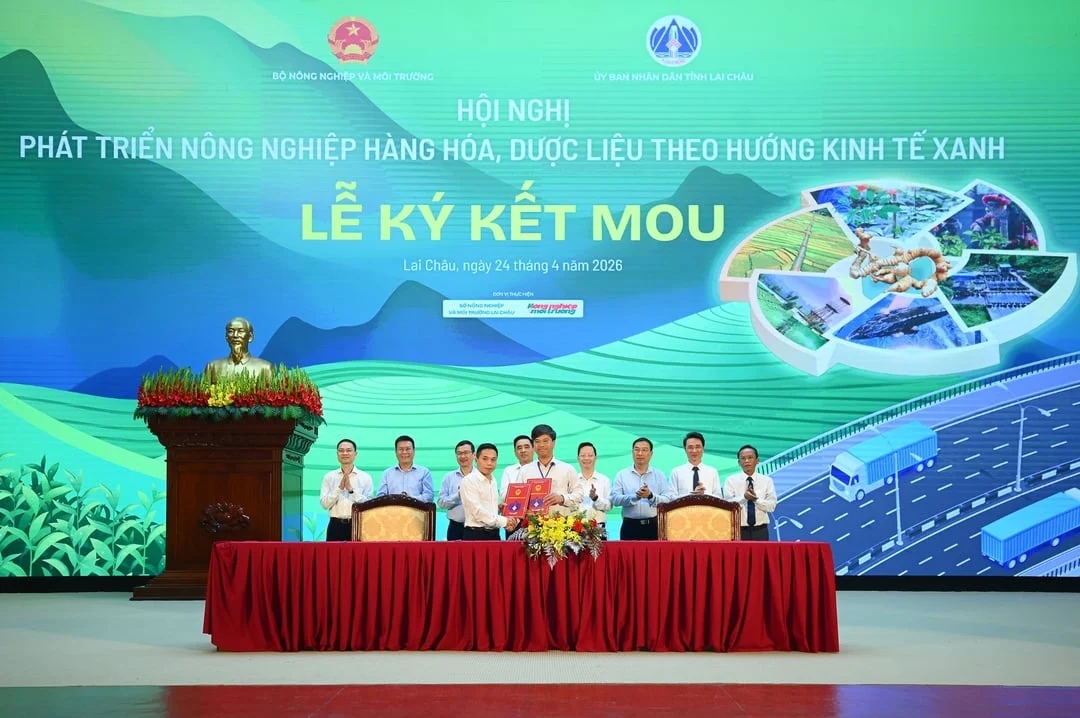
More than 10 partnerships signed to advance high-value farming, medicinal plants, technology transfer, and sustainable rural development
Against the backdrop of rising global demand for sustainable agriculture and green economic models, Lai Chau has unveiled an ambitious new phase of agricultural development through a series of strategic investment and cooperation agreements aimed at transforming the province into a hub for high-value, environmentally conscious agribusiness.
The agreements were formalized during the conference on “Developing Commodity Agriculture and Medicinal Plants Toward a Green Economy,” jointly organized by Vietnam’s Ministry of Agriculture and Environment and the Lai Chau Provincial People’s Committee. The gathering brought together policymakers, scientists, investors, cooperatives, and agribusiness leaders to chart a long-term roadmap for sustainable rural growth in one of Vietnam’s emerging agricultural regions.
At the center of the initiative is a coordinated effort to strengthen agricultural value chains through investment in raw material zones, modern processing infrastructure, scientific research, and technology transfer. The province signed more than ten memorandums of understanding and investment agreements spanning sectors including tea, medicinal plants, livestock, forestry, eco-tourism, macadamia cultivation, and circular agriculture.
Among the notable partnerships, Lai Chau entered into cooperation agreements with the Vietnam Macadamia Association and the Vietnam Tea Association to expand sustainable raw material areas and elevate the commercial value of key regional products such as macadamia and ancient Snow Shan tea.
The province also attracted investments in high-tech livestock production, including breeding projects for pigs and poultry, alongside large-scale medicinal plant cultivation initiatives focused on ginseng, cinnamon, rosemary, and herbal product development. Several agreements integrated agricultural production with eco-tourism, renewable forestry models, and forest carbon credit initiatives — reflecting an increasingly holistic vision of rural economic development.
Scientific institutions and research organizations were also brought into the framework to strengthen innovation and productivity. Agreements involving the Northern Mountainous Agriculture and Forestry Science Institute will support research and technology transfer for tea and fruit cultivation, with the goal of improving crop quality, processing efficiency, and climate resilience.
Provincial leaders described the agreements as part of a broader transition toward organic, circular, and value-added agricultural systems capable of balancing economic growth with environmental stewardship. The strategy seeks not only to raise farmer incomes and attract private investment but also to position Lai Chau as a model for sustainable highland agriculture in Vietnam.
Industry observers note that the province’s multi-sector approach reflects a growing trend across Asia toward integrating agriculture with ecological protection, advanced processing, tourism, and carbon-conscious development strategies as governments and businesses respond to shifting global food and sustainability priorities.
