
Revised profit-sharing model seeks to strengthen local community participation in renewable energy projects
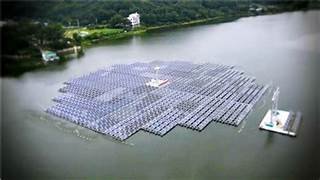
In a bold step toward reshaping its renewable energy landscape, Korea Rural Community Corp. has unveiled plans to expand floating solar capacity on the nation’s agricultural reservoirs to 3 gigawatts by 2030, positioning South Korea among the world’s most ambitious adopters of water-based photovoltaic infrastructure.
The initiative marks a dramatic scale-up from the approximately 105 megawatts of floating solar currently in operation across the country’s reservoir network. According to KRC, more than two-thirds of its 3,428 agricultural reservoirs have now been identified as technically viable for floating photovoltaic development, opening vast new opportunities for renewable energy deployment across rural landscapes.
The strategy reflects South Korea’s broader push to accelerate its transition away from fossil fuels while integrating clean energy generation with water management, agricultural sustainability, and regional economic development. Revenue generated through the expansion is expected to help offset longstanding financial pressures tied to agricultural water supply and infrastructure maintenance.
Under a newly revised profit-sharing framework, revenues from floating solar projects will be distributed equally among power developers, KRC, and local farming and fishing communities — a model designed to increase local participation and strengthen social acceptance of renewable energy projects. The revised structure replaces earlier arrangements that granted a larger share of profits to developers.
KRC confirmed that tenders for major floating solar developments at Asan Lake and Ganwol Lake are expected to proceed during the first half of 2026, with each site targeted for approximately 500 megawatts of capacity. Together, the projects are poised to become among the largest floating solar installations in Asia.
The country’s momentum in floating photovoltaic infrastructure continues to expand beyond agricultural reservoirs. K-water and Korea Western Power have also advanced plans for the second phase of a floating solar project at Hapcheon Dam in South Gyeongsang Province. The expansion builds upon an existing 41.5-megawatt floating array and is being developed in partnership with Lotte Chemical under a renewable power purchase agreement.
The Hapcheon initiative has been described by project stakeholders as a landmark renewable energy development, combining public-sector leadership, corporate clean-energy procurement, and community revenue-sharing mechanisms within a single infrastructure model.
South Korea’s floating solar ambitions form part of a broader national energy transformation agenda. Earlier this month, the government presented a sweeping energy transition strategy targeting 100 gigawatts of renewable energy capacity by 2030 as the country seeks to reduce fossil fuel dependence and expand electrification powered by clean energy sources.
Industry analysts view floating solar as a strategically important technology for densely populated economies with limited land availability, offering the dual advantages of renewable power generation and reduced pressure on agricultural and urban land resources. As South Korea accelerates deployment across reservoirs and dams, the country is increasingly positioning itself at the forefront of next-generation renewable infrastructure innovation in Asia.
