
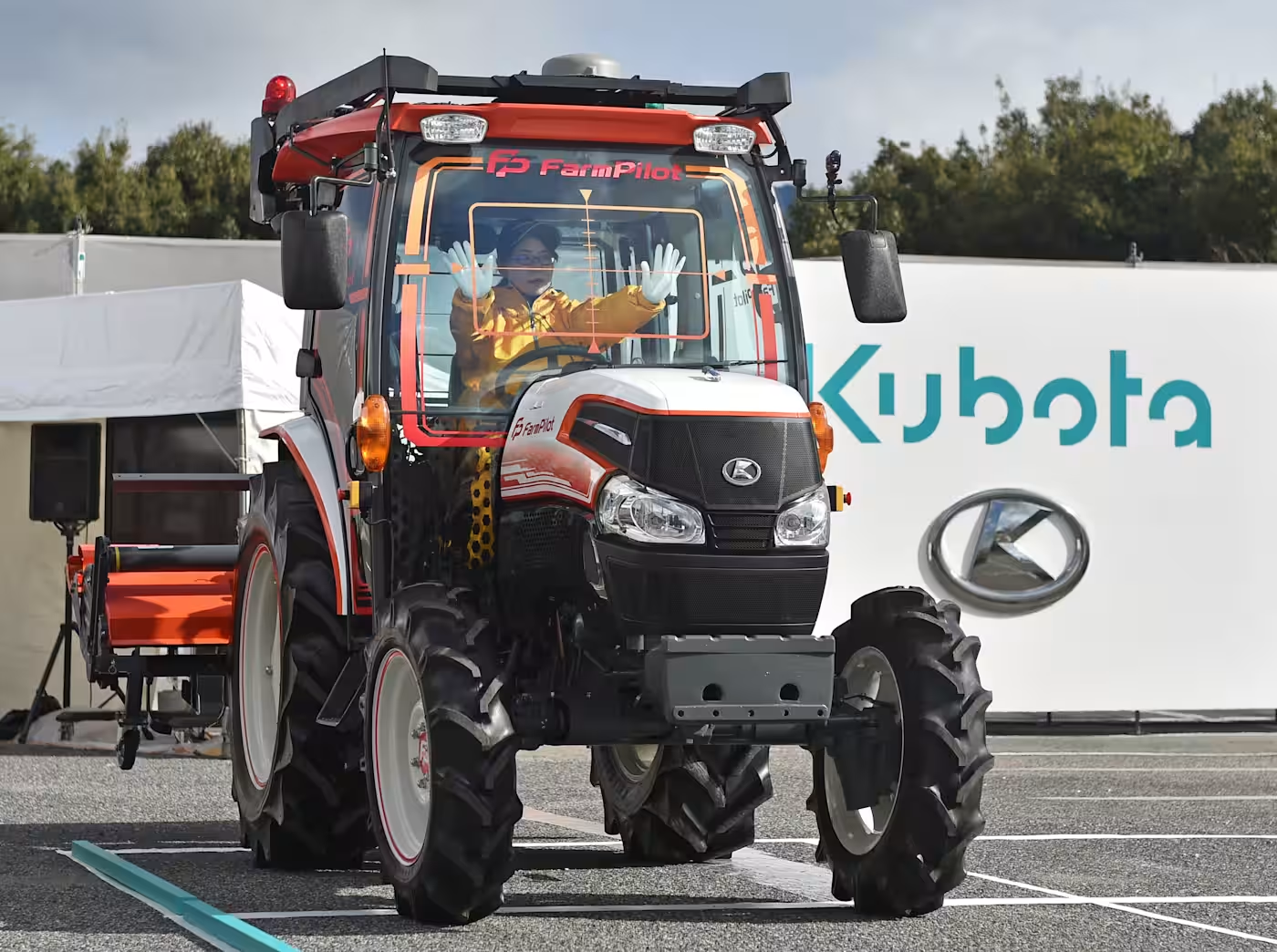
NTT, Kubota and DOCOMO test hybrid network for remote farm machinery control
NTT, Kubota, and NTT DOCOMO have completed a joint demonstration of advanced communication technologies designed to enable stable remote operation and monitoring of robotic agricultural machinery in mountainous regions, where network instability has historically limited automation deployment.
The experiment focused on maintaining continuous connectivity and high-quality video transmission for field operations by combining mobile networks with satellite communication systems. The integrated approach is intended to support future agricultural automation in challenging terrain conditions.
The demonstration showed that multi-link control systems can dynamically coordinate mobile and satellite connectivity based on real-time network conditions. This enabled uninterrupted communication between machinery operating within and across fields, even in areas with fluctuating mobile coverage.
A key component of the system is adaptive video control technology, which adjusts compression levels based on available bandwidth while preserving image clarity in operationally critical zones such as machinery paths and crop zones. This allows operators to maintain situational awareness without overwhelming communication channels.
Together, the technologies address one of the key barriers to agricultural automation: the reliability of remote monitoring systems in environments with unstable connectivity. Mountainous and hilly regions account for a significant share of cultivated land in Japan, making the issue central to nationwide agricultural modernization efforts.
The companies emphasized that stable communications are essential for safe remote operation of robotic agricultural equipment, particularly as regulatory frameworks evolve to support autonomous machinery on public roads under monitored conditions.
NTT, Kubota Corporation, and NTT DOCOMO jointly developed and tested the system, combining expertise in wireless quality prediction, agricultural machinery, and video transmission optimization.
NTT contributed multi-link communication orchestration and wireless quality prediction systems designed to optimize network selection between terrestrial and satellite links. Kubota provided robotic agricultural machinery platforms and test environments in representative mountainous farmland conditions. NTT DOCOMO developed the video transmission system capable of prioritizing image quality in critical operational areas while compressing non-essential data.
The results indicate that hybrid communication architectures can significantly improve reliability for remote agricultural operations, particularly in environments where standalone mobile networks are insufficient.
The companies plan to further refine the system toward real-world deployment, with the broader goal of enabling fully autonomous agricultural operations supported by resilient, data-driven communication infrastructure. The initiative also forms part of broader efforts to advance sustainable, technology-enabled agriculture both in Japan and globally.
