
Women harvesters will participate in Fair Trade Committees to support sea cucumber farming and community governance
Swiss seafood company Blueyou has launched a Fair Trade Certified tuna program in the Maldives in partnership with Fair Trade USA, aiming to strengthen sustainable seafood supply chains while supporting coastal livelihoods and marine conservation efforts.
The initiative, announced ahead of World Tuna Day on May 2, will work with 25 island communities across eight atolls and is expected to benefit around 30,000 people, including approximately 2,500 tuna fishers and 500 women involved in sea cucumber farming and seagrass restoration activities.
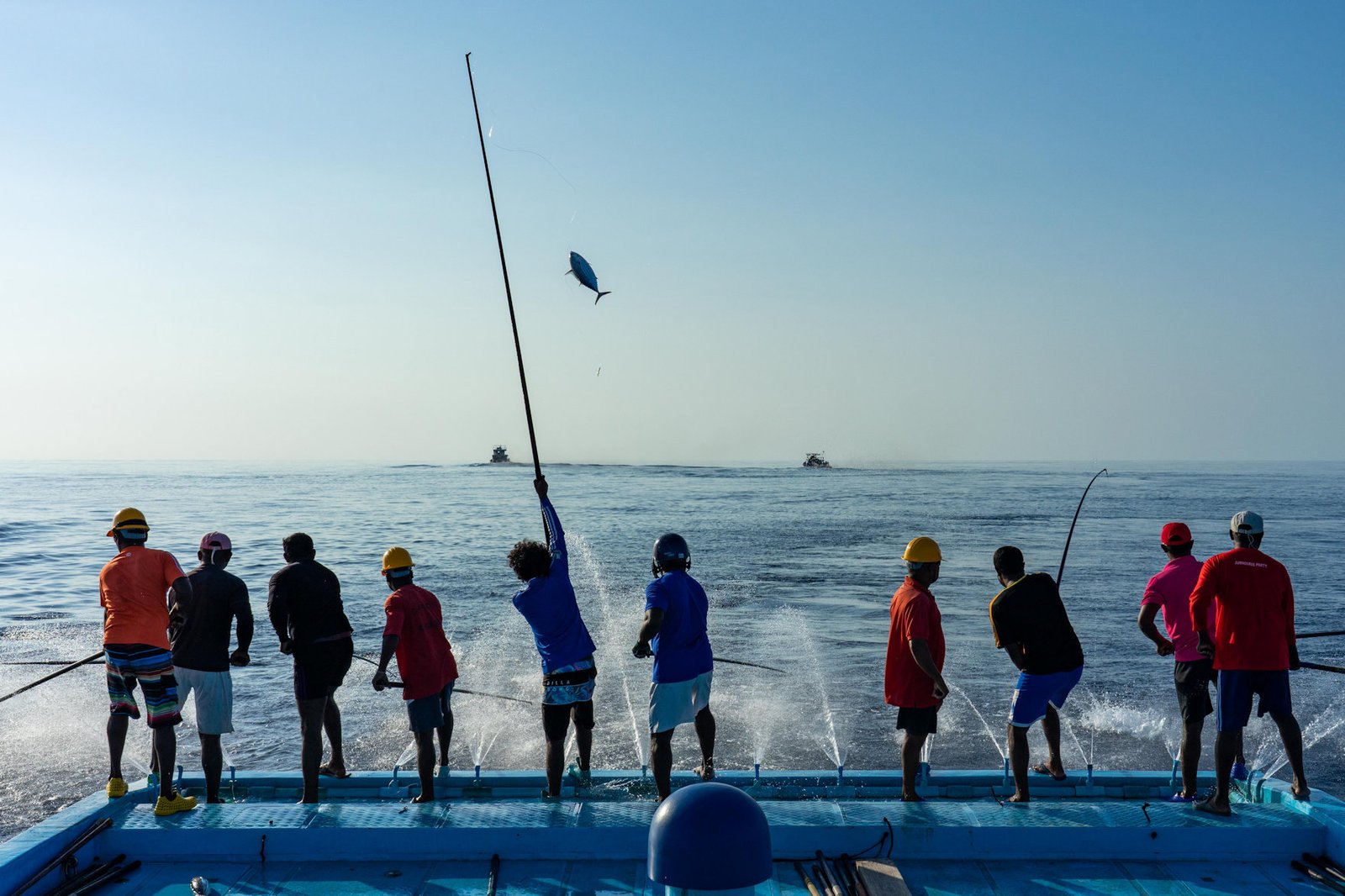
The fisheries component of the program focuses on skipjack and yellowfin tuna harvested through traditional pole-and-line fishing, a method widely regarded as one of the most sustainable forms of commercial tuna fishing due to its lower environmental impact and reduced bycatch.
According to the companies, the program aims to scale Fair Trade-certified operations to 200 fishing vessels with an annual catch capacity of 20,000 metric tons. The initiative is also expected to channel more than $700,000 in Fair Trade Community Development Funds into participating island communities for social, environmental, and infrastructure projects.
Blueyou said the program combines sustainable fisheries with restorative mariculture, community development, and marine habitat conservation to create more resilient blue economy systems. A key component of the initiative involves organizing women mariculture harvesters into Fair Trade Committees to support inclusive governance and develop alternative income opportunities through sea cucumber cultivation.
The company said the program will also support seagrass conservation and restoration, recognizing the role of seagrass ecosystems in biodiversity protection, coastal resilience, and carbon storage. Additional sustainability measures include plans to pilot a solar-powered ice plant aimed at reducing emissions linked to seafood processing, along with plastic recycling and waste management initiatives funded through Fair Trade mechanisms.
Blueyou said the tuna program is designed to supply shelf-stable Fair Trade Certified tuna products to retail markets in Europe and North America. The company has already secured distribution partnerships with followfood in Europe and envisible and Arkk Food in the United States.
According to Blueyou, its five-year target is to supply 500 freight containers of Fair Trade Certified canned tuna to international retail markets.
Industry observers say the initiative reflects growing demand from global seafood buyers and retailers for traceable, socially responsible, and environmentally sustainable seafood supply chains. The program also highlights increasing efforts within the seafood industry to integrate social inclusion, climate resilience, and ecosystem restoration into commercial fisheries and blue economy development models.
