
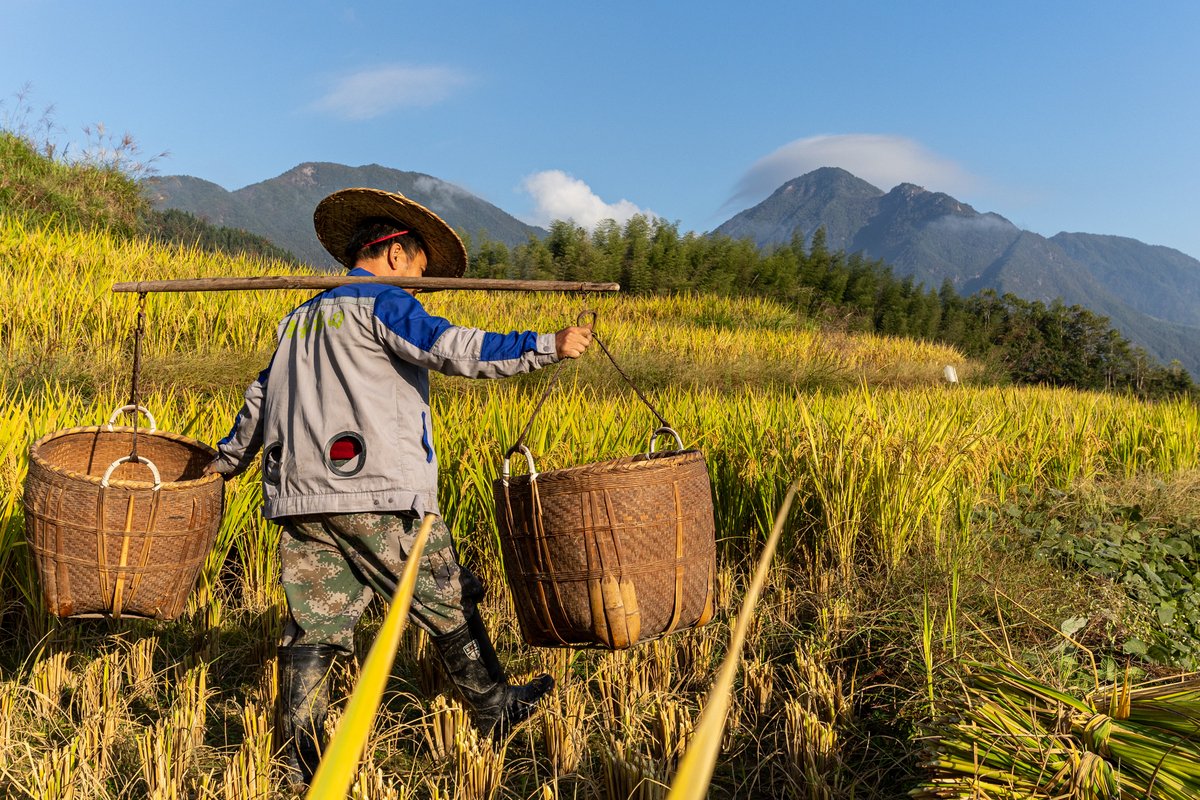
State Council blueprint prioritizes food security, technological self-reliance and sustainable rural development under the 15th Five-Year Plan
China has unveiled an expansive roadmap to accelerate agricultural and rural modernization through 2030, setting ambitious targets for food security, technological innovation and sustainable rural development as the world’s second-largest economy seeks to strengthen the foundations of its agricultural sector amid mounting demographic, environmental and geopolitical challenges.
The State Council, China’s cabinet, has formally released its agricultural and rural modernization strategy for the 15th Five-Year Plan period (2026–2030), positioning agriculture as a central pillar of the country’s broader modernization agenda while outlining a comprehensive framework designed to enhance productivity, resilience and competitiveness across the rural economy.
At the heart of the plan lies a binding commitment to raise China’s comprehensive grain production capacity to approximately 725 million tonnes by 2030, reinforcing the country’s long-standing emphasis on food self-sufficiency and strategic agricultural security. The target builds upon China’s strong production performance in 2025, when national grain output reached approximately 714.9 million tonnes, marking the second consecutive year that harvests exceeded the 700-million-tonne threshold.
Alongside production goals, the government has established a second mandatory benchmark aimed at strengthening food quality and consumer confidence, requiring the national pass rate for routine agricultural product quality and safety inspections to reach at least 98 percent by 2030.
The new strategy signals a subtle but significant evolution in policy priorities. While safeguarding grain supplies and essential agricultural commodities remains paramount, authorities are increasingly emphasizing quality enhancement, value creation and consumer-oriented agricultural development.
“On the basis of ensuring stable and secure supplies of grain and other important agricultural products, greater emphasis will be placed on improving quality and efficiency in the agriculture sector,” a Ministry of Agriculture and Rural Affairs official stated, noting that the strategy aims to better satisfy growing demand for nutritious, high-quality and health-oriented food products.
Beyond the two binding targets, the plan outlines 13 additional developmental objectives covering areas such as meat production, green agricultural practices, rural environmental management, technological advancement and income growth among farming households.
A major theme running through the blueprint is the acceleration of scientific and technological transformation across the agricultural value chain. Beijing has set a target of increasing the contribution of agricultural science and technology to sectoral development from more than 64 percent in 2025 to 67 percent by 2030, reflecting the government’s determination to reduce dependence on traditional productivity drivers and cultivate innovation-led growth.
The strategy calls for substantial investments in agricultural research, advanced breeding technologies, intelligent farming systems and next-generation mechanization. Authorities also plan to scale emerging sectors that could redefine agricultural production in the coming decades, including AI-enabled breeding technologies, new-energy agricultural machinery, low-altitude agricultural applications, agricultural bio-manufacturing and novel food production systems.
Artificial intelligence features prominently throughout the plan, with policymakers identifying digital agriculture as a strategic growth area capable of improving productivity, resource efficiency and farm management precision. Expanded deployment of AI-driven technologies is expected to complement ongoing efforts to modernize agricultural infrastructure and enhance rural economic competitiveness.
The plan also seeks to accelerate breakthroughs in what Chinese policymakers describe as “new quality productive forces” within agriculture—an increasingly prominent concept that prioritizes innovation-intensive development and technological upgrading across strategic industries.
To support these ambitions, Beijing has outlined a series of large-scale investment initiatives encompassing high-standard farmland construction, agricultural science and technology innovation platforms, cold-chain logistics infrastructure, food preservation systems and agricultural processing modernization.
Cold-chain development, in particular, is expected to play an increasingly important role in reducing post-harvest losses, improving food quality and strengthening supply chain resilience as consumer demand shifts toward higher-value agricultural products.
Alongside productivity improvements, the strategy places considerable emphasis on sustainability and rural revitalization. Policymakers have pledged to accelerate the green transformation of agricultural production through environmentally responsible farming practices, resource conservation measures and improved waste management systems.
The plan also seeks to advance the integrated development of urban and rural regions, improve public services in rural communities and enhance infrastructure conditions to support broader economic and social development.
Equally significant is Beijing’s continued commitment to consolidating and expanding the gains achieved through its nationwide poverty alleviation campaign. Rural income growth remains a key objective of the modernization strategy, with policymakers aiming to ensure that agricultural transformation translates into tangible improvements in living standards across farming communities.
The new roadmap underscores China’s recognition that future food security will depend not merely on expanding production volumes, but on building a technologically sophisticated, environmentally sustainable and economically competitive agricultural system capable of meeting evolving domestic demand while withstanding external shocks.
As global food systems confront increasing pressure from climate change, geopolitical disruptions and resource constraints, China’s latest five-year blueprint represents one of the most comprehensive state-led efforts to reshape agriculture through a combination of technological innovation, infrastructure investment and rural economic transformation.
By 2030, Beijing hopes not only to secure its food supply but also to establish agriculture as a modern, innovation-driven industry capable of supporting the next phase of China’s economic and social development.
