
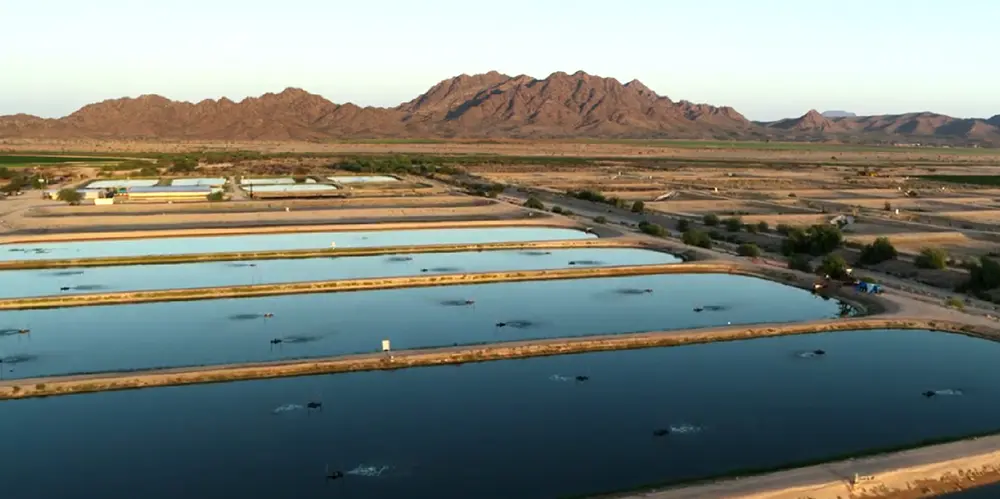

In an exclusive interaction with AgroSpectrum, Marcel Verbrugge, Aquaculture engineer, Dahui aquaculture limited outlines how desert aquaculture is emerging as a scalable solution for food security, water efficiency, and climate resilience
As climate stress and resource scarcity redefine global food systems, aquaculture is rapidly breaking free from its coastal roots—moving into some of the world’s most extreme environments. Along the edges of the Taklamakan Desert, cutting-edge innovations in water chemistry, microbial engineering, and Recirculating Aquaculture Systems (RAS) are turning inhospitable terrain into high-efficiency seafood production hubs.
This shift is gaining momentum in regions like Saudi Arabia, where food security imperatives and policy backing are accelerating investment in desert-based farming. What was once experimental is now emerging as a scalable, technology-driven blueprint for resilient, localized protein production.
Against this backdrop, several companies are pushing the technological frontier—integrating RAS, artificial seawater systems, and climate-controlled infrastructure to unlock new production ecosystems. The model also aligns with broader shifts toward circular resource use, digital monitoring, and precision farming.
This interview with Marcel Verbrugge explores how these innovations are converging, what it takes to scale them sustainably, and whether desert aquaculture could redefine the future of global food production in an era of climate stress and resource constraints.
Transforming the fringes of the Taklamakan Desert into productive aquaculture farms represents a striking reimagining of landscape and resource use. What technological and ecological breakthroughs made it possible to cultivate fish and shrimp in such an extreme environment?
The single most critical challenge—and indeed the defining breakthrough—has been water engineering: the ability to convert chemically hostile saline-alkali groundwater into a stable, biologically productive aquaculture medium. In regions such as the Taklamakan Desert, groundwater is not scarce, but it is inherently unsuitable for aquaculture due to high salinity and extreme alkalinity. The innovation lies in systematically transforming this constraint into a controlled aquatic ecosystem through a multi-stage process often described as “salt-alkali water seawater restoration.”
The first stage is baseline utilization. Farmers tap into shallow aquifers—often just two meters below the surface—where naturally saline groundwater can reach salinity levels of up to 8 parts per thousand. While this salinity is lower than seawater, it provides a foundational mineral profile that can be engineered further, reducing the need to build water chemistry from scratch.
The second stage involves precise chemical balancing. The native groundwater is typically highly alkaline, with pH levels ranging from 9.5 to as high as 11—far beyond the tolerance range of most aquatic species. Through a combination of desalination and dealkalization techniques—primarily by blending with freshwater and applying buffering agents—the water is carefully adjusted to a pH range of 7.5 to 8.5. This calibrated environment closely mimics marine conditions found in bodies such as the South China Sea, creating a chemically stable foundation for aquaculture.
The most sophisticated layer of this transformation is microbial mimicry. Proprietary microbial consortia and beneficial bacterial communities are introduced not merely to purify the water, but to actively regulate and stabilize its biochemical dynamics. These microbes facilitate nutrient cycling, control ammonia and nitrite levels, and gradually establish a living, self-regulating system that behaves like a natural seawater ecosystem. This step is critical in enabling the successful cultivation of marine species such as shrimp and seabass in a completely artificial inland environment.
Beyond water chemistry, controlled-environment infrastructure plays a complementary role. In countries like Saudi Arabia, desert aquaculture is increasingly integrated with greenhouse-based systems and hybrid water models that combine saline and freshwater inputs. These enclosed or semi-enclosed systems buffer extreme temperature fluctuations, reduce evaporation losses, and allow year-round production under tightly regulated conditions.
Taken together, these breakthroughs—hydrochemical engineering, microbial ecosystem design, and climate-controlled infrastructure—represent a fundamental shift in how aquaculture environments are created. Rather than relying on naturally suitable ecosystems, producers are now able to design and replicate optimal aquatic conditions in some of the harshest landscapes on earth.
Desert aquaculture relies on saline groundwater, engineered ponds, and tightly monitored production systems. From a sustainability perspective, how viable is this model over the long term, particularly with regard to water management, soil salinity, and ecosystem balance?
Long-term sustainability in desert aquaculture hinges on how effectively operations transition from resource extraction to closed-loop, circular production systems. Given the fragility of arid ecosystems, the model’s viability is being defined by innovations that simultaneously address water efficiency, soil protection, and ecosystem balance.
At the core is advanced water stewardship. Recirculating Aquaculture Systems (RAS) have fundamentally redefined water use efficiency, enabling up to 99 percent recycling within production units. This dramatically reduces dependence on freshwater inputs—an essential advantage in desert regions where water scarcity is the primary constraint. In parallel, Integrated Aqua-Vegeculture Systems (iAVs) extend this efficiency by channeling nutrient-rich aquaculture effluents into agriculture. Instead of being discharged as waste, this water is repurposed to irrigate salt-tolerant crops such as halophytes or fodder, effectively converting a liability into a productive input stream.
Equally important is the management of soil salinity and environmental leakage. The use of lined ponds and engineered containment systems prevents seepage of saline water into surrounding soils, mitigating long-term land degradation risks. Increasingly, farms are adopting zero-discharge systems, where all process water is treated, recirculated, and reused within the facility. This not only minimizes ecological impact but also enhances regulatory compliance and operational predictability.
The model is further strengthened through circular economy integration. Organic waste from aquaculture—such as sludge and residual biomass—is being processed through anaerobic digestion systems to generate biogas, which can partially offset the high energy demands of intensive aquaculture. This is particularly relevant in desert environments, where energy-water trade-offs are critical. Complementing this, the integration of solar power is emerging as a natural fit, leveraging abundant sunlight to reduce reliance on conventional energy sources and improve the overall carbon footprint of operations.
Technological sophistication is another defining pillar. Modular RAS designs allow for scalable, compartmentalized production with minimal environmental interaction, reducing biosecurity risks and enabling precise control over farming conditions. On top of this, AI- and IoT-enabled monitoring systems are transforming operational management. Real-time data on water quality, temperature, oxygen levels, and feed efficiency allows for predictive interventions, optimizing both productivity and resource use while minimizing waste and system stress.
Finally, the strategic use of brackish groundwater—often unsuitable for agriculture or human consumption—adds an important sustainability dimension. By utilizing this otherwise underutilized resource, desert aquaculture avoids competing with critical freshwater needs, reinforcing its role as a complementary, rather than extractive, food production system.
Taken together, these innovations position desert aquaculture not merely as viable, but as a highly engineered, resource-efficient model capable of sustaining long-term production in some of the world’s most water-constrained environments.
One of the arguments for inland aquaculture in desert regions is logistical efficiency—bringing seafood production closer to major inland markets. How significant are the economic advantages of reduced transport time and supply-chain costs compared with traditional coastal aquaculture?
Inland aquaculture, particularly in desert regions, is increasingly being recognized not just as a technological breakthrough but as a structural shift in supply chain economics. By relocating production closer to consumption centers, the model fundamentally redefines how seafood moves from farm to fork, unlocking efficiencies that extend well beyond simple logistics.
The most immediate advantage lies in reduced transport time and cost. Traditional seafood supply chains often depend on long-distance movement from coastal farms to inland consumption hubs, requiring cold-chain infrastructure, multiple handling points, and, in many cases, freezing to preserve shelf life. Inland aquaculture eliminates much of this complexity. Producers situated near major population centers can deliver fresh, never-frozen products within hours rather than days, significantly lowering freight costs while also capturing premium pricing in urban markets where freshness is a key differentiator.
This compression of the supply chain also translates into a measurable reduction in carbon emissions. Long-haul transportation—whether by refrigerated trucks, air freight, or shipping—carries a substantial environmental footprint. By shortening these routes, inland systems reduce fuel consumption and emissions intensity per unit of output. In a global context where food systems are under increasing scrutiny for their climate impact, this becomes a strategic advantage, particularly for markets with tightening sustainability regulations.
Equally important is the resilience dimension. The COVID-19 pandemic exposed the fragility of globally dispersed food supply chains, where disruptions in logistics, port operations, or trade flows can quickly translate into shortages and price volatility. Inland aquaculture offers a more localized and decentralized production model, insulating regions from external shocks and enhancing food security. This localization also has multiplier effects for regional economies—supporting jobs, stimulating ancillary industries, and reducing dependence on imports.
Beyond these core benefits, proximity to markets enables greater demand responsiveness. Producers can better align output with consumption patterns, reduce inventory losses, and adapt more quickly to shifts in consumer preferences. This agility is particularly valuable for high-value, perishable commodities like seafood, where timing and quality directly influence margins.
Taken together, inland aquaculture is not merely about geographic relocation—it represents a reconfiguration of the seafood value chain, where efficiency, sustainability, and resilience converge to create a more robust and economically viable production model.
China’s desert aquaculture experiments are often framed as a new agricultural frontier. Could this model realistically be replicated in other arid regions of the world, such as the Middle East, Central Asia, or parts of Africa, and what prerequisites would be essential for success?
The shift toward desert aquaculture is no longer confined to experimental projects—it is actively expanding across regions, demonstrating that the model is both adaptable and scalable under very different economic and environmental conditions. What is emerging globally is not a single approach, but a spectrum of models ranging from high-tech industrial systems to community-driven solutions, all built on the same core principle: decoupling aquaculture from natural water bodies.
In Saudi Arabia, aquaculture is being positioned as a strategic pillar of food security. While coastal net-pen farming continues along the Red Sea, the real acceleration is in land-based systems, particularly Recirculating Aquaculture Systems (RAS). These systems allow for controlled, year-round production in desert environments using minimal water. Private players, including startups such as Mustadem, are developing desert-optimized RAS facilities focused on high-value species like sobaity seabream. The objective is clear: reduce import dependence while building a stable, domestic supply of premium seafood tailored to local consumption patterns.
The United Arab Emirates is taking a similarly ambitious but more capital-intensive route, emphasizing scale and technological sophistication. Large infrastructure projects—such as a planned 3,000-tonne-per-year RAS facility developed through partnerships between Abu Dhabi-based investment entities and international technology providers—highlight the country’s push toward self-sufficiency. By farming species like rainbow trout in fully controlled desert environments, the UAE is demonstrating how advanced aquaculture can overcome climatic limitations while ensuring consistent quality and output.
In contrast, South Africa illustrates a different, equally important pathway. In the Kalahari Desert, initiatives led by INMED South Africa have focused on low-cost, community-based aquaponics systems. These integrated models combine fish farming with vegetable cultivation, dramatically improving resource efficiency—using up to 90 percent less water than traditional agriculture—while delivering tangible social impact. In some cases, vegetable production has increased by 300 percent, with systems becoming a primary source of fresh food for local schools and communities. This underscores that desert aquaculture is not exclusively a high-tech solution; it can also be a tool for grassroots food security and rural development.
Bridging these different models are technology providers such as Dahui Aquaculture Limited, which are deploying modular, scalable RAS solutions across regions like Kuwait and the broader GCC. These systems integrate advanced water treatment, climate control, and biosecurity protocols, enabling consistent production even under extreme environmental conditions. Their modular design allows for phased expansion, reducing upfront risk while accelerating adoption in emerging markets.
Whether through high-investment, technology-driven systems in the Gulf or community-oriented aquaponics in Africa, the underlying innovation—efficient water use, controlled environments, and system integration—remains constant. This flexibility is precisely what makes desert aquaculture a compelling solution for the future of food production in water-constrained regions.
Beyond the novelty of farming seafood in the desert, what broader lessons does this experiment offer about the future of food production—particularly in a world facing climate stress, land degradation, and growing demand for protein?
The deeper significance of desert aquaculture lies in its philosophical shift. It challenges the traditional assumption that food production must be tied to naturally fertile environments. Instead, it demonstrates that with the right combination of technology and ecological understanding, production can be decoupled from geography.
This model embodies the future of food systems: resilient rather than vulnerable, circular rather than extractive, and precise rather than wasteful. It shows that degraded or extreme landscapes can be repurposed into productive ecosystems, reducing pressure on already stressed natural resources.
Perhaps most importantly, it offers a scalable framework for addressing global protein demand without exacerbating deforestation, overfishing, or freshwater depletion.
Saudi Arabia’s push toward Recirculating Aquaculture Systems (RAS) reflects a strategic response to water scarcity and food security challenges. How transformative is this technology for a desert nation seeking to produce more of its own protein domestically?
For a desert nation like Saudi Arabia, the adoption of Recirculating Aquaculture Systems (RAS) represents not just a technological upgrade, but a fundamental restructuring of how food can be produced under extreme resource constraints. It directly addresses the Kingdom’s two most binding limitations—acute water scarcity and harsh climatic conditions—while aligning closely with the strategic objectives of Saudi Vision 2030 to enhance food security and reduce import dependence.
Conventional aquaculture is inherently water-intensive and geographically dependent on coastal or freshwater ecosystems. RAS breaks both constraints. By operating as a closed-loop system, it continuously filters, treats, and recirculates water within the production unit, achieving recycling efficiencies of up to 99 percent. This dramatically reduces the need for freshwater withdrawals, making it possible to sustain high-density fish production even in the middle of arid desert landscapes.
A critical advantage of RAS in the Saudi context is its ability to utilize non-potable water sources. Systems can be designed to operate on saline or brackish groundwater—resources that are otherwise unsuitable for agriculture or human consumption. This ensures that aquaculture does not compete with already limited freshwater supplies, preserving them for domestic and municipal use while still enabling large-scale protein production.
Equally transformative is the level of environmental control these systems provide. Modern RAS facilities are typically housed in climate-controlled, prefab structures equipped with automated heating, cooling, and aeration systems. This allows producers to maintain optimal growth conditions regardless of external temperatures, which can fluctuate dramatically in desert environments. As a result, a wide range of species—from freshwater fish to marine species grown in artificial seawater—can be cultivated with high consistency and predictability.
This controlled environment also significantly enhances biosecurity. By isolating production from external ecosystems, RAS minimizes exposure to pathogens, pollutants, and environmental variability. This leads to lower mortality rates, reduced reliance on antibiotics, and more stable production cycles—critical factors for building a reliable domestic aquaculture industry.
Beyond production efficiency, the technology enables year-round, location-independent farming, effectively decoupling aquaculture from geography. This opens the door for distributed production models closer to consumption centers, further strengthening supply chains.
In essence, RAS transforms aquaculture from a resource-dependent activity into a precision-controlled, infrastructure-driven system. For Saudi Arabia, this is not merely about producing fish—it is about building a resilient, self-sufficient protein ecosystem that can operate sustainably within one of the world’s most water-constrained environments.
RAS systems can reduce water use by up to 99 percent compared with conventional aquaculture. From an economic and environmental standpoint, how sustainable is this model at scale, particularly in a region where water and energy costs are critical considerations?
While Recirculating Aquaculture Systems (RAS) are often described as near–closed-loop systems, the operational reality—particularly in desert climates—is more nuanced. Water efficiency remains exceptionally high, but not absolute, and understanding these dynamics is critical to assessing long-term economic and environmental sustainability.
In arid regions such as Saudi Arabia, evaporation is the primary source of water loss. High ambient temperatures, combined with aeration and system circulation, typically result in daily water loss of around 5 percent. In addition, a further 2–3 percent of water is discharged through filtration processes—such as mechanical filters, protein skimmers, and sludge removal systems—which are essential to maintaining water quality and system stability.
However, what distinguishes advanced RAS operations is how this “lost” water is managed. Rather than being treated as waste, discharge streams are increasingly captured, treated, and repurposed. Nutrient-rich effluent—containing nitrogen, phosphorus, and organic matter—can be reused for agricultural applications, including irrigation of date palms, fodder crops, or other desert-adapted agriculture. This creates a linked aquaculture-agriculture system, where outputs from one process become inputs for another, significantly improving overall resource efficiency.
From an economic standpoint, these partial losses are offset by the system’s overall efficiency and the broader operating environment. In many Gulf countries, including Saudi Arabia, energy costs are relatively low compared to Europe, often supported by government subsidies or favorable industrial tariffs. This is particularly important because RAS systems are energy-intensive, requiring continuous pumping, filtration, aeration, and temperature control.
Moreover, government support plays a pivotal role in enhancing viability. Subsidies, infrastructure investment, and policy backing under frameworks such as Saudi Vision 2030 reduce capital and operational barriers, accelerating adoption at scale. This supportive ecosystem allows producers to absorb higher energy usage while still maintaining competitive production costs.
Importantly, ongoing integration of renewable energy—particularly solar—has the potential to further rebalance the water-energy equation. As these systems evolve, the combination of high water reuse, byproduct utilization, and improving energy efficiency is steadily strengthening the sustainability profile of RAS in desert environments.
In essence, while RAS is not entirely lossless, it represents a highly optimized system where even inefficiencies are captured and repurposed, making it one of the most viable models for aquaculture in water-constrained regions.
Saudi Vision 2030 places strong emphasis on food security and economic diversification. What role do you see advanced aquaculture playing in strengthening the Kingdom’s domestic food supply chains and reducing reliance on seafood imports?
To build a more resilient and diversified food supply chain, Saudi Arabia is moving decisively beyond traditional aquaculture staples toward a broader, higher-value species portfolio. While tilapia continues to anchor domestic production—accounting for roughly a third of output—the strategic focus is now on expanding species diversity to enhance nutritional value, market competitiveness, and consumer preference alignment.
A key dimension of this shift is the successful introduction of new, high-value species through advanced technologies like Recirculating Aquaculture Systems (RAS). One notable breakthrough has been the cultivation of trout in controlled desert environments—an achievement that would have been unthinkable under conventional aquaculture conditions. This not only expands the domestic availability of premium, omega-3-rich protein but also demonstrates the flexibility of RAS to support species traditionally limited to cooler climates.
At the same time, there is a strong emphasis on cultivating native and regionally adapted species. Institutions such as King Abdullah University of Science and Technology (KAUST) are playing a pivotal role in developing breeding and hatchery programs for species like sobaity seabream, snubnose pompano, and orange-spotted grouper. These species are naturally suited to the Red Sea ecosystem and are highly valued in local markets, making them commercially viable while reducing biological risk.
The impact of these efforts is already visible in production data. Saudi Arabia’s aquaculture sector has experienced rapid expansion, with output increasing by more than 55 percent in 2023 to exceed 140,000 tonnes. This growth trajectory is aligned with ambitious national targets to scale production to 600,000 tonnes annually by 2030—a transformation that would significantly rebalance the country’s seafood supply-demand equation.
The implications for food security are substantial. By increasing domestic production capacity, the Kingdom can reduce its reliance on seafood imports—currently estimated at around 200,000 tonnes annually—while also stabilizing local markets against global price volatility and supply chain disruptions. This localization of production enhances not only availability but also price predictability and quality control.
Crucially, this expansion is not being pursued at the expense of sustainability. The integration of advanced aquaculture technologies, combined with a focus on resource efficiency and environmental management, ensures that growth is aligned with long-term ecological constraints. Under the broader framework of Saudi Vision 2030, aquaculture is evolving from a niche sector into a strategic pillar of national food security and economic diversification.
In effect, Saudi Arabia is not just increasing output—it is reengineering its seafood value chain, building a system that is more diverse, technologically advanced, and resilient to external shocks.
Looking ahead, could Saudi Arabia emerge as a global leader in desert-based aquaculture innovation? What lessons might other water-scarce regions learn from the Kingdom’s approach to combining sustainability, technology, and food production?
Saudi Arabia is already positioning itself as a leader in this space. The combination of strong government backing, access to capital, and a clear strategic imperative has accelerated innovation and deployment at scale.
Other water-scarce regions—including Oman, Qatar, and Iraq—are beginning to pivot away from traditional open-pond aquaculture toward recirculating systems, recognizing the limitations imposed by water scarcity.
The key lesson is that sustainability and productivity are no longer mutually exclusive. By integrating advanced technology, policy support, and circular resource management, it is possible to build food systems that are both efficient and resilient. Desert aquaculture, once considered improbable, is fast becoming a blueprint for the future of food production in a resource-constrained world.
— Suchetana Choudhury (suchetana.choudhuri@agrospectrumindia.com)
