
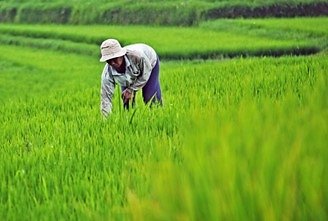
Hasanuddin University research projects rice production may rise nearly 10 per cent in 2025 amid growing food security concerns
Hasanuddin University researchers have found that Indonesia’s Planting Area Expansion (PAT) programme could play a major role in reversing declining rice production and strengthening national food security as pressure on agricultural land intensifies.
The study, led by Andi Amran Sulaiman, Indonesia’s Minister of Agriculture and researcher affiliated with Hasanuddin University, projects that the country’s rice production could reach 58.43 million tonnes in 2025, representing an increase of nearly 10 per cent compared with 2024 levels.
According to the study, approximately 30 per cent of the projected production increase — equivalent to around 1.62 million tonnes — could be directly attributed to the government’s PAT programme. The findings were published in the February 2026 edition of AGRIVITA Journal of Agricultural Science.
Indonesia has faced mounting concerns over food security in recent years as rice production struggled to keep pace with rising demand driven by population growth and increasing incomes. At the same time, the country has experienced a steady decline in available rice cultivation land due to urbanisation, industrial development and the conversion of farmland for non-rice crops.
Between 2020 and 2024, national rice production declined despite growing domestic demand, increasing pressure on policymakers to strengthen agricultural productivity and protect food supplies. In response, the Indonesian government introduced the Planting Area Expansion programme aimed at increasing harvest areas through land optimisation, irrigation improvements and expanded farm-level support systems.
The Hasanuddin University research team used a structured vector autoregression econometric model and analysed monthly agricultural data spanning more than three decades, from January 1993 through March 2025. The analysis incorporated multiple variables including rice production, commodity prices, imports, climate patterns and global market conditions to assess the long-term effectiveness of agricultural policy interventions.
The study found that existing rice fields could contribute approximately 33 per cent of projected production growth, while fertiliser subsidies and price-related policy measures also played a significant role in supporting output expansion.
Researchers said the findings demonstrate the importance of sustained agricultural policy continuity, land protection measures, farmer support systems and technology adoption in strengthening Indonesia’s food security outlook. “These findings underscore that boosting rice production in Indonesia depends on policy continuity, land protection, stronger farmer support and technology adoption,” said Andi Amran Sulaiman.
The researchers added that further policy-focused agricultural research would be critical in supporting the United Nations Sustainable Development Goal of Zero Hunger. The study comes as governments across Asia increasingly prioritise domestic food security and agricultural resilience amid climate volatility, supply chain disruptions and rising global commodity price uncertainty.
Indonesia, one of the world’s largest rice-consuming nations, has intensified efforts to improve agricultural productivity while balancing environmental sustainability and land-use pressures. The PAT programme is expected to remain a key component of the country’s broader agricultural modernisation and food security strategy over the coming years.
