
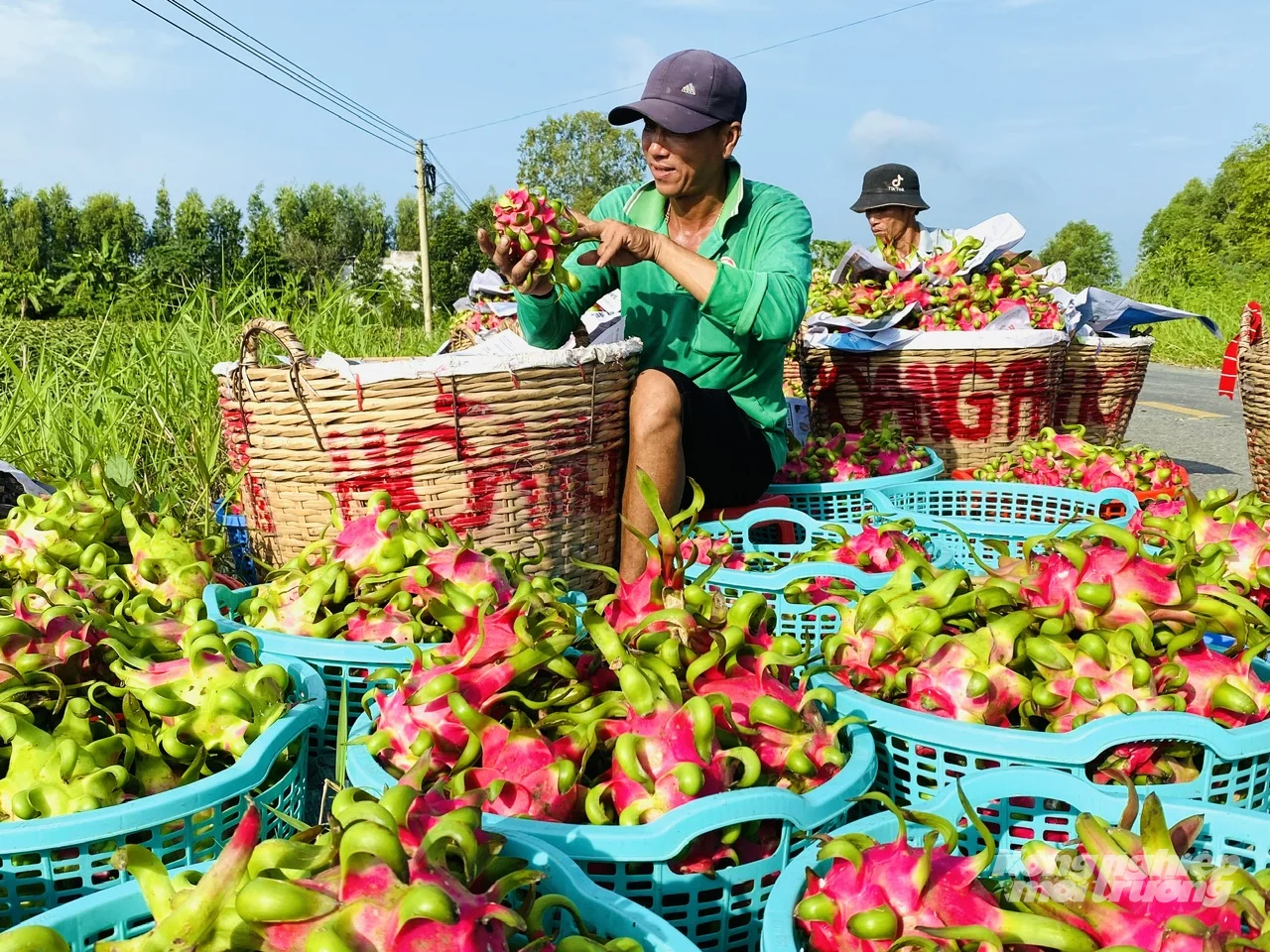
Pilot programme to prioritise durian and key export fruits as province builds digital backbone for agriculture from 2026–2030
Dong Thap has moved to fast-track a comprehensive agricultural traceability framework aimed at reshaping how the province’s farm produce is tracked, certified, and integrated into global value chains. Under a newly issued provincial plan, the initiative will span agriculture, forestry, and fisheries products over the 2026–2030 period, with a longer-term vision extending to 2035.
The programme marks a structural shift in the province’s agricultural governance model, positioning traceability not merely as a compliance requirement, but as a core infrastructure for export competitiveness, food safety assurance, and value enhancement across supply chains.
Durian and export fruit supply chains take early lead in pilot phase
In the first phase of implementation, Dong Thap will prioritise high-value export-oriented commodities, particularly durian and selected fruit crops that already operate under stringent international market requirements.
The provincial administration has outlined plans to pilot the traceability system at a durian preliminary processing and packaging facility in 2026. This pilot will serve as a testbed to evaluate operational feasibility, data integration capacity, and compliance alignment with importing country standards before wider deployment across sectors.
The approach reflects growing pressure on Vietnamese agricultural exports to meet increasingly complex regulatory frameworks in markets such as Australia, the European Union, and Northeast Asia, where traceability is becoming a non-negotiable market access condition.
End-to-end digital traceability across the agricultural value chain
The planned system will cover the entire agricultural lifecycle—from cultivation and harvesting to processing, storage, logistics, and final consumption. Each stage of the value chain is expected to be digitally recorded and linked through an integrated traceability infrastructure.
Priority will be given to export-driven commodities and key provincial agricultural clusters, including mango, durian, longan, jackfruit, and citrus fruits. Dong Thap currently has more than 3,200 registered planting area codes serving export markets, forming a foundational dataset for system integration.
Officials have indicated that by 2030, all approved planting area codes and packing facilities linked to export markets will be required to adopt standardized traceability systems, significantly expanding digital compliance coverage across the province’s agricultural base.
Building a unified agricultural data ecosystem
The traceability framework will be supported by a coordinated institutional mechanism involving multiple provincial departments, including agriculture and environment, science and technology, industry and trade, and health authorities.
The Department of Agriculture and Environment will serve as the lead agency responsible for implementation, training, and system coordination. It will also oversee the development of a consolidated list of priority agricultural and OCOP products to be integrated into the traceability platform.
Parallel efforts will focus on strengthening digital infrastructure, building secure agricultural databases, and deploying standardized information systems capable of ensuring interoperability across production units, cooperatives, exporters, and regulatory bodies.
The province has also emphasised the need to integrate modern technologies such as QR code labelling, blockchain systems, and artificial intelligence-based validation tools to improve data authenticity, reduce fraud risks, and enhance consumer confidence in product origin verification.
Institutional push towards market-linked agricultural modernisation
Officials describe the initiative as part of a broader restructuring of the agricultural sector aimed at improving transparency, enhancing product value, and strengthening global competitiveness.
Traceability is increasingly being positioned as a strategic tool rather than a regulatory mechanism alone. By linking production data directly with market requirements, the system is expected to enable better pricing efficiency, reduced post-harvest risks, and improved alignment between farmers and export supply chains.
Within this framework, export compliance is being redefined as a continuous process rather than a final-stage certification step, embedding accountability across the entire production ecosystem.
Farmers see traceability as pathway to market stability
At the grassroots level, early adoption of planting area codes and traceability registration is already beginning to reshape farm-level market interactions.
Farmers involved in structured cultivation models have reported improved market access and more stable demand visibility once their produce is linked to traceable supply chains. The system is also being viewed as a potential buffer against price volatility by strengthening contractual and export-oriented linkages.
Stakeholders in the province note that traceability adoption is gradually shifting farmer engagement from fragmented local markets toward more structured and export-integrated value chains, offering long-term income stability and reduced exposure to intermediaries.
Strategic shift toward export-grade agricultural governance
Officials have described the initiative as an important step in aligning provincial agriculture with international integration standards. With global food markets increasingly demanding verifiable origin data, compliance with traceability systems is becoming central to maintaining and expanding export access.
Dong Thap’s roadmap positions agricultural traceability as a foundational reform, linking digital infrastructure with production systems to create a more resilient, transparent, and globally competitive agricultural economy.
As the system moves from pilot to scale, the province is expected to emerge as one of the early adopters of fully integrated agricultural traceability in the Mekong Delta region, setting a precedent for broader national implementation in the coming decade.
