
Reform framework aims to strengthen input quality control, accelerate green transition, and boost global competitiveness of agricultural exports
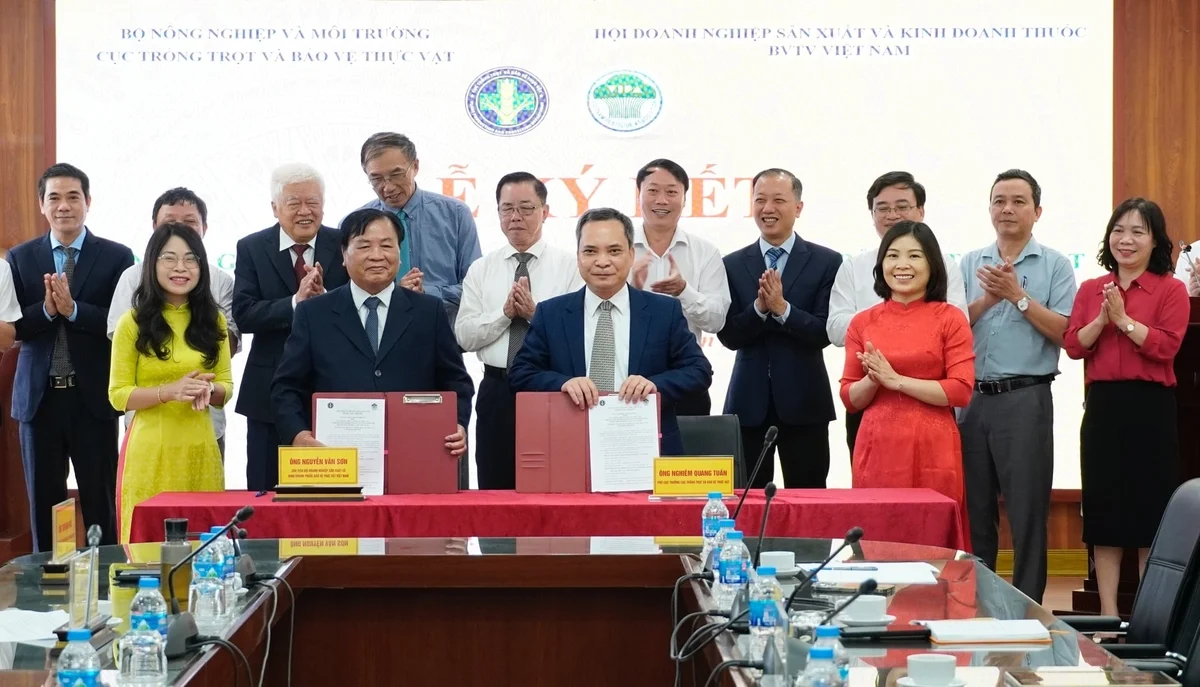
In a significant recalibration of agricultural governance, the Plant Production and Protection Department (PPPD) under Vietnam’s Ministry of Agriculture and Environment has formalised cooperation agreements with three major industry associations representing the seed, fertilizer, and pesticide sectors. The move signals a deliberate shift toward a more consultative, data-driven governance model aimed at strengthening the competitiveness and sustainability of Vietnamese crop exports.
The agreements were signed in Hanoi on May 10, marking what officials described as a structural evolution in state management—from administrative command mechanisms toward a dialogue-based framework rooted in shared responsibility, technical coordination, and continuous policy feedback.
From administrative control to collaborative governance architecture
The newly established framework reflects an evolving governance philosophy in Vietnam’s crop production sector. Under the model, the state retains its core regulatory role as an institutional designer, risk supervisor, and safeguard of public interest, while industry associations and enterprises are positioned as active partners in policy formulation, compliance dissemination, and technical implementation.
This recalibration is designed to improve responsiveness in a sector increasingly shaped by global trade standards, food safety regulations, and environmental sustainability benchmarks. Authorities noted that the approach prioritises transparency, joint oversight, and structured dialogue as foundational principles of sector management.
Seeds, fertilizers, and pesticides repositioned as strategic production pillars
At the heart of the reform is a redefinition of agricultural inputs. Seeds, fertilizers, and pesticides are no longer viewed as standalone production materials, but as integrated strategic pillars that determine yield quality, environmental impact, and export competitiveness across the entire crop value chain.
The PPPD has outlined a coordinated action agenda with industry associations focused on strengthening quality control systems, eliminating counterfeit and substandard inputs, and promoting traceability and compliance standards aligned with international markets.
Simultaneously, the framework places strong emphasis on innovation-led input systems, including the development of climate-resilient seed varieties, smart nutrient management solutions, and biologically based crop protection technologies.
Seed systems targeted for genetic improvement and resilience building
Within the seed sector, the cooperation framework prioritises research, development, and deployment of high-performance varieties capable of withstanding climate stress, pest pressure, and evolving agronomic conditions. Strengthening intellectual property protection and seed quality certification systems is also a central pillar of the reform agenda.
Authorities underscored that seed systems represent the foundational entry point of agricultural productivity, directly shaping yield outcomes and export competitiveness. As such, improved governance in this segment is expected to have cascading effects across the entire production ecosystem.
Fertilizer strategy shifts toward efficiency and low-emission agriculture
The fertilizer sector is being repositioned toward smart nutrient management systems designed to improve efficiency while reducing environmental degradation. The reform agenda includes accelerated adoption of organic fertilizers and next-generation formulations that enhance soil health and support greenhouse gas mitigation commitments.
The focus is increasingly on reducing input wastage, improving application precision, and aligning fertilizer usage with sustainable production goals. This reflects a broader policy transition toward low-emission agriculture systems compatible with international sustainability standards.
Pesticide governance prioritises safety and biological alternatives
In the pesticide segment, the framework emphasizes safe, responsible, and science-led usage practices. The PPPD is encouraging wider adoption of biological crop protection solutions and integrated pest and disease management systems, aimed at reducing dependency on chemical inputs.
The shift is designed to balance productivity needs with ecological protection, ensuring that crop protection practices remain aligned with food safety requirements and environmental sustainability objectives.
Regulatory ecosystem aligned with green and export-oriented agriculture
Officials noted that the crop production sector is facing intensifying pressures from climate change, soil degradation, and increasingly stringent international food safety and traceability standards. In this context, the governance reform is intended to align domestic production systems with global market expectations.
The cooperation agreements are expected to facilitate coordinated policy development, enhanced regulatory enforcement, and systematic dissemination of technical standards across industry stakeholders, thereby improving compliance efficiency and reducing fragmentation in implementation.
Industry associations positioned as policy intermediaries
Industry associations representing seed, fertilizer, and plant protection enterprises will play an expanded role under the new framework. Beyond representing business interests, they will function as intermediaries between the state and market participants, supporting policy communication, technical training, market monitoring, and innovation dissemination.
This expanded role reflects an intent to institutionalise structured dialogue mechanisms that allow real-time feedback from industry actors into regulatory design and execution.
Export growth anchors urgency of reform agenda
Vietnam’s crop production sector continues to play a central role in the country’s agricultural export economy, contributing a significant share of total agricultural trade value. Recent export performance data highlights the growing importance of crop-based commodities in driving national agricultural revenue.
Against this backdrop, policymakers have emphasised that strengthening input quality systems and regulatory coherence is critical to sustaining export momentum and improving value addition in global markets.
Legal and institutional reforms on the horizon
Stakeholders at the signing ceremony also highlighted the need for ongoing legislative updates, particularly revisions to laws governing crop production and plant protection frameworks. These reforms are expected to create a more flexible regulatory environment while maintaining robust oversight mechanisms.
The focus is on building a legal architecture that supports innovation, enables market expansion, and ensures alignment with international trade requirements, without compromising regulatory integrity.
Implementation through structured coordination mechanisms
The PPPD confirmed that the agreements will be operationalised through annual coordination programmes, sector-specific action plans, and targeted technical initiatives. These will include training programmes, technology transfer initiatives, demonstration models, and market surveillance activities.
A key emphasis will be placed on strengthening two-way information flows between regulators and industry actors, enabling faster identification of operational challenges and more responsive policy interventions.
Toward a more integrated and competitive crop economy
The reform initiative represents a broader shift in Vietnam’s agricultural governance philosophy—one that prioritises integration over fragmentation, collaboration over hierarchy, and sustainability over short-term output maximisation.
By embedding industry stakeholders more deeply into the policy ecosystem, the government aims to build a more resilient, transparent, and globally competitive crop production sector.
As implementation begins, the effectiveness of this model will be tested in its ability to translate institutional coordination into measurable improvements in productivity, input quality, and export performance across Vietnam’s rapidly evolving agricultural landscape.
