
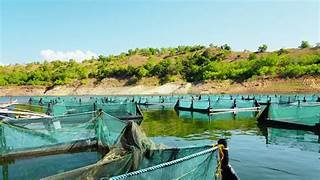
MMK 2.0 introduces separate awards for inland and coastal municipalities with multi-million peso incentives
The Department of Agriculture–Bureau of Fisheries and Aquatic Resources (DA-BFAR) has formally launched the enhanced Malinis at Masaganang Katubigan (MMK 2.0) program in Lobo, Batangas, marking a significant expansion of the country’s flagship fisheries recognition initiative to now include both coastal and inland aquatic ecosystems nationwide.
Reintroduced in its upgraded form, MMK 2.0 broadens the scope of the annual nationwide search that honors outstanding local government units (LGUs) for exemplary performance in fisheries governance, environmental stewardship, and sustainable management of aquatic resources. The program, formerly known as Malinis at Masaganang Karagatan, was first introduced in 2016 as part of the government’s efforts to promote cleaner and more productive marine environments.
Under the expanded framework, the program now formally recognizes two distinct categories: coastal fisheries and inland fisheries. Coastal ecosystems encompass municipal waters, mangroves, coral reefs, and adjacent marine habitats, while inland fisheries cover rivers, lakes, wetlands, reservoirs, and other freshwater systems that sustain local communities.
With this expansion, MMK 2.0 introduces separate distinctions for the Most Outstanding Coastal Municipality and the Most Outstanding Inland Municipality, each evaluated under science-based and sustainability-driven criteria. These include ecosystem conservation, fisheries governance effectiveness, and the maintenance of clean and resilient aquatic environments.
The grand winner for the coastal category will receive a ₱5 million grant, while the top inland municipality will be awarded ₱3 million. Non-winning LGUs remain eligible for special recognition awards, each carrying a ₱100,000 incentive, underscoring the program’s broader aim of encouraging continuous improvement across all participating communities.
DA-BFAR emphasized that the strengthened program reflects the agency’s commitment to inclusive and science-driven fisheries management, anchored on the principle that both marine and freshwater systems are vital pillars of national food security.
National Fisheries Director Elizer “Toto” S. Salilig underscored the importance of collective responsibility in safeguarding the country’s aquatic resources, noting that local government units play a central role in translating national policies into tangible environmental outcomes at the community level.
He further emphasized that while individual efforts may be modest, their cumulative impact can yield meaningful transformation toward cleaner waters, more abundant fisheries, and improved livelihoods for fishing communities across the archipelago.
The expansion of MMK 2.0 comes amid renewed calls to strengthen support for small-scale fishers and improve the sustainability of both coastal and inland fisheries, reinforcing the program’s role as a key instrument in advancing ecological balance, food security, and inclusive rural development.
