
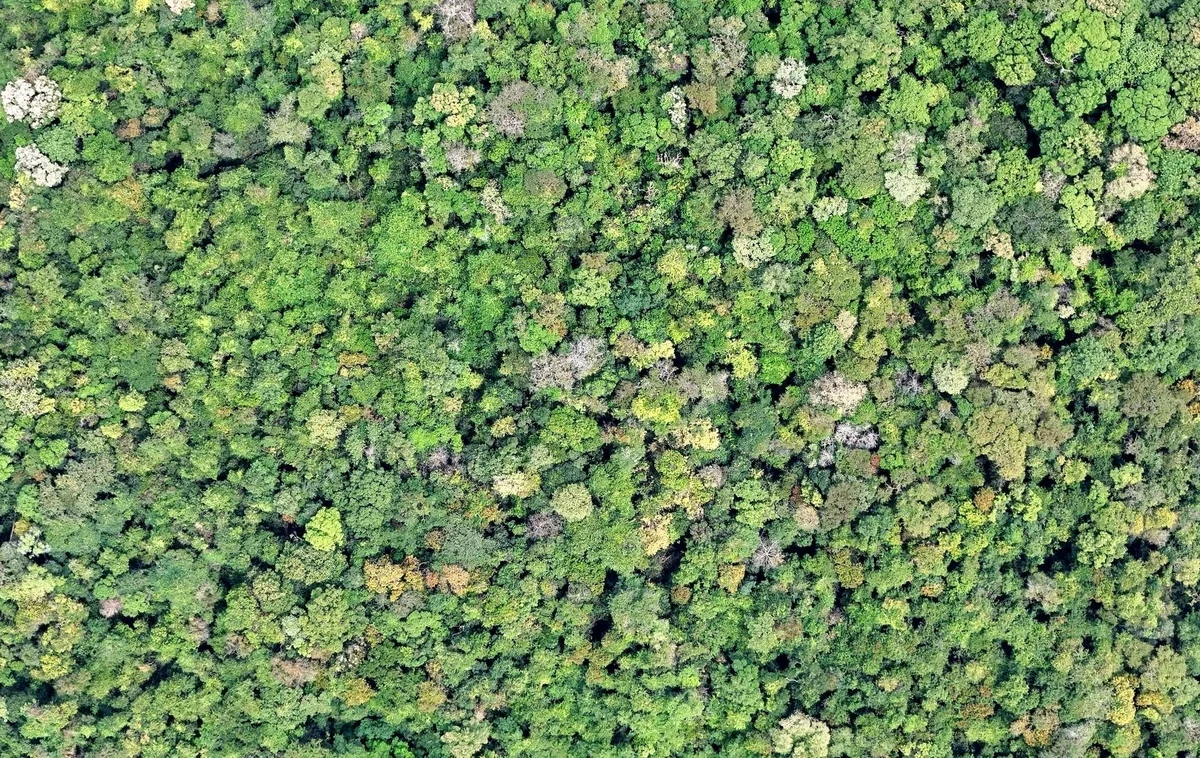
Province advances REDD+, ERPA program, and digital MRV systems to monetize forest carbon absorption potential
The province of Lam Dong is advancing preparations to actively participate in the commercialization of forest carbon credits, positioning its extensive forest resources as a key driver of sustainable green finance and long-term environmental economic development.
With more than 1.1 million hectares of forest, including nearly 1 million hectares of natural forest, Lam Dong is considered one of Viet Nam’s most significant forested provinces, offering substantial potential for carbon absorption and storage services. Local authorities have identified forest carbon credits as a strategic opportunity to generate new financial resources while contributing to national Net Zero commitments by 2050.
According to provincial officials, the Department of Agriculture and Environment has been actively advising the provincial government on mechanisms to access both domestic and international carbon markets. Domestically, Lam Dong is coordinating with relevant ministries to implement the legal and operational framework under Decree No. 29/2026/ND-CP, which supports the development of a national carbon trading platform. In parallel, Decree No. 180/2026/ND-CP provides additional regulatory foundations for forest carbon absorption and storage services.
On the international front, Lam Dong is among five provinces participating in the Emission Reductions Payment Agreement (ERPA) program with the Emergent Forest Finance Accelerator, under the ART-TREES standard. The initiative is expected to facilitate the transfer of approximately 5.15 million tons of CO₂ between 2021 and 2025, with negotiated prices ranging from USD 10–15 per tCO₂e, potentially generating VND 300–500 billion in local revenue.
Since 2021, the province has also been preparing for REDD+ implementation, with forest monitoring data, emissions tracking, and carbon sequestration information integrated into the national Measurement, Reporting and Verification (MRV) system. These efforts have enabled initial recognition of emission reduction results under international standards, although revenue disbursement has yet to begin due to ongoing negotiation phases and institutional limitations.
Provincial authorities acknowledge that challenges remain, including reliance on central-level MRV systems, limited local technical capacity, and the need for clearly defined benefit-sharing mechanisms among stakeholders. However, continued reforms are underway to address these gaps.
To transform potential into practical outcomes, Lam Dong is pursuing a series of strategic measures, including accelerating ERPA implementation, strengthening forest databases, and applying advanced technologies such as remote sensing, digital mapping, and data analytics to improve MRV accuracy and transparency.
The province is also conducting detailed assessments of high-carbon forest areas, prioritizing natural forests, watershed zones, and biodiversity-rich ecosystems. Carbon credit development is being integrated with existing programs such as REDD+, Payment for Forest Environmental Services (PFES), sustainable forest management, forest restoration, and climate-resilient agricultural models.
In addition, Lam Dong is preparing local-level carbon projects in accordance with national regulations, while ensuring alignment with Viet Nam’s Nationally Determined Contributions (NDCs) and avoiding double counting of emissions reductions. Efforts are also being made to design equitable benefit-sharing mechanisms among the state, forest owners, and local communities.
Capacity-building initiatives, training programs, and international cooperation are being expanded to strengthen technical expertise and attract financial and technical support from climate finance institutions and global partners.
Authorities emphasize that the province’s approach to carbon market development will remain guided by the principles of caution, transparency, effectiveness, and sustainability, prioritizing strong institutional foundations over rapid commercialization.
Ultimately, Lam Dong aims to establish a stable and long-term green finance ecosystem that enhances forest protection livelihoods, supports circular economy development, and maximizes the multi-functional value of its forest resources.
