
Advanced grain management systems, horticultural exports and fisheries cooperation emerge as key pillars of the growing partnership
The Philippines and Japan have agreed to deepen agricultural cooperation through a broad-based agenda encompassing food exports, advanced farming technologies, post-harvest infrastructure, and long-term food security initiatives, reinforcing a strategic partnership aimed at enhancing agricultural competitiveness and supply-chain resilience.
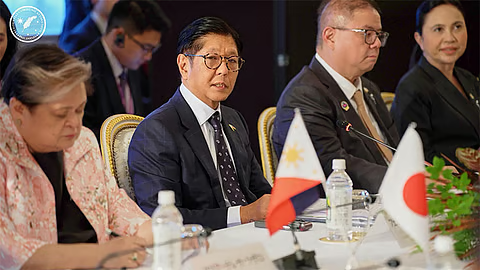
The expanded collaboration emerged from high-level engagements held during President Ferdinand Marcos Jr.’s official visit to Japan from May 26–29, where members of the Philippine delegation conducted extensive discussions with Japanese government officials and industry stakeholders.
Agriculture remains a central pillar of the bilateral agenda, with both countries exploring opportunities to strengthen market access, accelerate technology transfer, and improve logistics efficiency across agricultural and fisheries value chains.
Among the immediate priorities is the planned export of Philippine pomelos to Japan before the end of the year, alongside preparations for participation in a major international horticulture exposition scheduled for March 2027. The initiative is expected to enhance global visibility for Philippine horticultural products, including ornamental plants and other high-value crops that continue to attract growing international demand.
The two countries also discussed measures to strengthen trade in key agricultural commodities, particularly bananas, which remain the Philippines’ largest agricultural export to Japan. Philippine officials reiterated the importance of improving market access conditions as the country advances its ambitions to join the Comprehensive and Progressive Agreement for Trans-Pacific Partnership (CPTPP), a move viewed as strategically important for expanding export competitiveness.
Beyond horticulture and fruit exports, discussions extended to livestock development and fisheries cooperation, with particular attention given to tuna, one of the Philippines’ most valuable seafood exports in the Japanese market.
Food security and post-harvest management also emerged as critical areas of collaboration. Japanese grain storage and processing systems, equipped with highly automated drying, dehusking and handling technologies, were identified as potential models for modernising the Philippines’ grain management infrastructure.
Industry observers note that Japan’s ability to maintain rice reserves for extended periods offers valuable lessons for strengthening food security strategies and improving inventory management capabilities within the Philippines’ agricultural system.
The partnership further builds on ongoing field evaluations of Japanese agricultural technologies currently being tested in Davao. Early results from these trials have reportedly demonstrated strong potential for improving productivity and operational efficiency, paving the way for wider deployment across major Philippine crop sectors.
The latest initiatives reflect a broader effort by both countries to strengthen agricultural resilience amid growing challenges related to climate variability, food inflation, supply-chain disruptions and changing global trade dynamics. By combining Japan’s technological expertise with the Philippines’ agricultural potential, the partnership seeks to create new opportunities for sustainable growth, export expansion and long-term food security across the region.
