
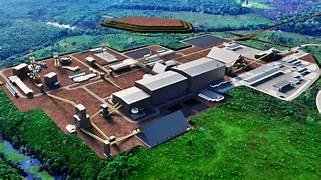
Long-term contract could generate $10 million in lifetime savings while supporting critical mine development activities
Brazil Potash has signed a non-binding memorandum of understanding (MoU) with energy solutions provider Gera Center for a 28-year Build, Own, Operate and Transfer (BOOT) agreement designed to power the company’s flagship Autazes Potassium Project in Amazonas, a move expected to reduce upfront capital requirements while strengthening long-term operational reliability.
The proposed agreement represents a significant milestone in the project’s financing and infrastructure strategy, transferring approximately $33 million in initial power generation investment away from the project’s construction budget and into a long-term operating-cost structure. The arrangement is expected to generate an estimated $10 million in net savings over the life of the contract compared with assumptions outlined in the project’s Preliminary Feasibility Study.
Under the terms of the MoU, Gera Center will be responsible for supplying, installing, operating, and maintaining a fleet of 63 modular containerized diesel generator units capable of delivering up to 20 megawatts (MW) of power. The system will initially provide 10 MW during early project development before expanding to the full 20 MW capacity within the first year of operation.
The power solution addresses one of the most critical challenges facing the Autazes development: the absence of grid electricity during the construction phase. The generator system will provide the entire power requirement for civil construction activities, shaft sinking operations, and other early-stage infrastructure works. According to the company, electricity generation could commence within 120 days of signing a definitive agreement.
Beyond construction, the power infrastructure is expected to play a strategic role throughout the mine’s operational life. Once the project is connected to Brazil’s national electricity network through a planned 500-kilovolt transmission line, the Gera Center facility will transition into a backup power system, providing emergency electricity support for approximately 23 years.
The agreement includes a minimum 98 per cent availability requirement, ensuring operational continuity in the event of interruptions to the national grid. Such redundancy is considered particularly important for large-scale mining operations, where power disruptions can have significant operational and financial consequences.
Matt Simpson, Chief Executive Officer of Brazil Potash, said the arrangement offers both economic and operational advantages for the project.
“This BOOT agreement with Gera Center provides reliable power for construction in a location where the electrical grid is not yet available, while also reducing the initial project deployment costs,” Simpson said.
He noted that Gera Center was selected following a competitive procurement process involving 12 invited companies, underscoring the strategic importance of securing dependable energy infrastructure for the project.
The proposed partnership also forms part of a broader financing strategy being pursued by Brazil Potash. According to Simpson, the company is evaluating as many as five separate BOOT agreements across various infrastructure components as a means of reducing upfront capital expenditures and improving project financing flexibility.
While the agreement remains non-binding and subject to the execution of definitive contracts, the announcement highlights continued progress at the Autazes project, widely regarded as one of Brazil’s most strategically important fertilizer developments.
The project sits at the centre of Brazil’s long-term efforts to reduce its dependence on imported potash, a critical nutrient used in crop production. Brazil currently imports the vast majority of its potash requirements, leaving the country vulnerable to supply disruptions, geopolitical uncertainties, and international price volatility.
Against this backdrop, the Autazes Potassium Project has emerged as a key component of national agricultural security planning, with policymakers and industry stakeholders viewing domestic potash production as increasingly important for supporting the country’s status as one of the world’s leading agricultural exporters.
By combining innovative financing structures with infrastructure partnerships, Brazil Potash is seeking to accelerate project development while minimizing capital intensity—an approach that could become increasingly relevant as large-scale mining and fertilizer projects face growing pressure to optimize investment efficiency in a volatile global economic environment.
