
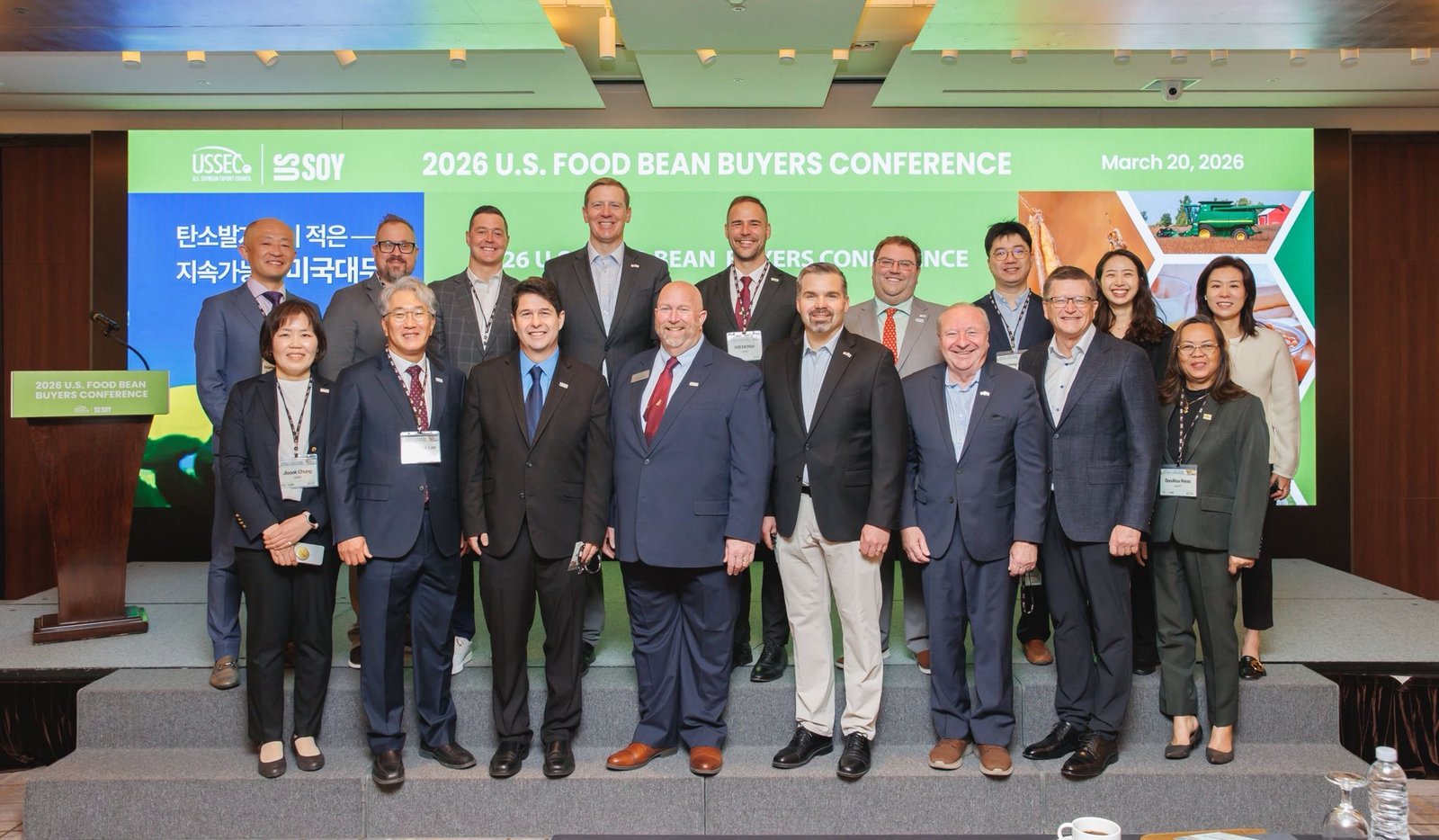
Highlights from 2026 U.S. Soybean Meal Conference in Seoul and the Northern Soy Marketing trade mission in Vietnam,
The global agricultural landscape is undergoing significant transformation as the world faces mounting challenges related to food security, climate change, and the need for sustainable production systems. In this context, U.S. Soy has emerged as a critical player, not only as a reliable source of high-quality protein and oil but also as a driver of sustainable agricultural practices.
Recent events, such as the 2026 U.S. Soybean Meal Conference in Seoul and the Northern Soy Marketing trade mission in Vietnam, underscore the growing importance of U.S. Soy in meeting the demands of diverse markets while addressing environmental and nutritional priorities.
The 2026 U.S. Soybean Meal Conference in Seoul served as a platform to bring together key stakeholders from Korea’s feed industry, including feed millers, buyers, and industry leaders. This gathering highlighted the critical role of U.S. soybean meal in feed production, particularly in supporting the growing demand for animal protein across Asia.
Participants were provided with detailed insights into market trends, supply outlooks, and the unique advantages of U.S. soybean meal. U.S. soybean producers Robb Ewoldt and Justin Sherlock shared their experiences and updates on sustainable farming practices, emphasizing how U.S. farmers are improving efficiency and environmental outcomes. These firsthand accounts reinforced the idea that U.S. Soy is not just a commodity but a product of innovation and stewardship.
Carlos (Rodrigo) Salinas, USSEC Executive Director for East Asia, provided a broader perspective on shifting global agricultural trade flows. His presentation highlighted how geopolitical and economic factors are reshaping supply chains, creating both challenges and opportunities for U.S. Soy. These insights are particularly relevant as markets like Korea seek to balance their reliance on imported feed ingredients with the need for consistent quality and sustainability.
Discussions at the conference also delved into the quality of soybean meal in animal production, with a focus on how U.S. Soy supports better performance in livestock while aligning with sustainability goals. This dual focus on performance and environmental responsibility is increasingly important as consumers and industries demand more from their supply chains.
In addition to the feed sector, the Food Bean Buyers Conference in Seoul showcased the versatility of U.S. Soy in the soy food industry. Sessions explored the benefits of non-GMO soybean production and identity preserved supply systems, which are particularly valued in markets like Korea where traceability and verified supply chains are critical.
Will McNair, USSEC Director of Soy Foods, Oil, provided updates on how U.S. producers are meeting the specific needs of Korea’s soy food sector, reinforcing the role of U.S. Soy in supporting both traditional and modern food applications. Nutrition and sustainability were recurring themes, with experts like Michelle Braun from the Soy Nutrition Institute Global emphasizing the health benefits of soy and its role in balanced diets.
Meanwhile, Chan-O Jun of Yonsei University Dairy highlighted how the Sustainable U.S. Soy (SUSS) logo is being integrated into Korea’s food sector, signaling a growing commitment to verified sustainability practices.
Across the region, the Northern Soy Marketing trade mission in Vietnam further demonstrated U.S. Soy’s global reach and impact.
Over three days, U.S. soybean producers and industry experts engaged with leading feed mills and producers, including Hoa Phat Agriculture, De Heus Vietnam, and JAPFA COMFEED VIETNAM. These engagements focused on the consistent quality of U.S. Soy and its ability to support Vietnam’s rapidly growing demand for animal protein.
As Vietnam’s middle class expands and dietary preferences shift toward higher protein consumption, the role of U.S. Soy in ensuring a reliable and high-performing feed supply becomes even more critical. The trade mission also reinforced the collaborative nature of U.S. Soy’s relationship with Vietnam’s feed sector.
By sharing insights and building partnerships, U.S. Soy stakeholders are not only meeting immediate needs but also laying the groundwork for long-term growth. This approach aligns with the broader goals of U.S. Soy to strengthen global food systems while promoting sustainability. Both events in Seoul and Vietnam illustrate how U.S. Soy is positioned at the intersection of innovation, sustainability, and market responsiveness.
From feed production to soy foods, U.S. Soy is meeting diverse needs while addressing critical challenges such as traceability, environmental impact, and nutritional value. These efforts are supported by programs like those facilitated by USDA Foreign Agricultural Service (FAS) Seoul, which play a vital role in fostering international collaboration and ensuring the continued success of U.S. Soy initiatives.
As the agricultural sector evolves, U.S. Soy stands out as a beacon of reliability and sustainability. Its ability to adapt to shifting trade flows, support diverse industries, and uphold high standards of quality and environmental stewardship makes it a cornerstone of modern agriculture. Whether in the feed mills of Korea or the soy food kitchens of Vietnam, U.S. Soy is proving its value as a partner in building a more sustainable and resilient global food system
