
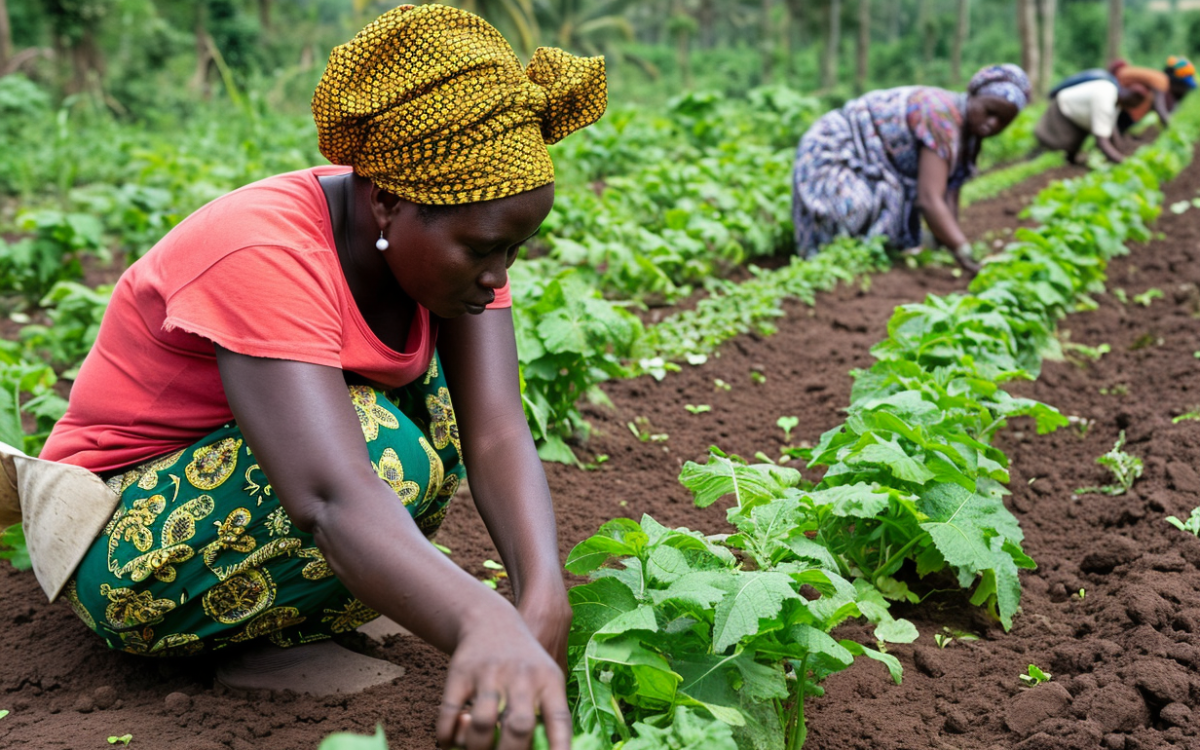
New pesticide formulation plant signals strategic transition from export-led trade to localized production, technology integration and long-term agricultural partnerships across Africa
Lagos, Nigeria, May 12, 2026: Against the backdrop of Africa’s rapidly evolving agricultural landscape, Essence Group has formally inaugurated Essence Crop Science Nigeria FZE, its first overseas pesticide manufacturing facility, marking a decisive new chapter in the company’s global expansion journey.
Set within the industrial corridor of the Lekki Free Zone, the commissioning of the facility reflects more than a manufacturing milestone. It represents a strategic recalibration of how agricultural companies engage with emerging markets — shifting from distant product supply models toward deeply embedded local ecosystems built around production, technology transfer, and regional agricultural resilience.
Constructed in a span of just twelve months after groundbreaking commenced in May 2025, the integrated facility combines formulation manufacturing, warehousing, research support, and quality control infrastructure designed specifically for African agricultural conditions. The project has already drawn attention within Nigeria’s industrial ecosystem for the speed and scale of its execution, emerging as one of the fastest-completed Chinese-backed manufacturing projects within the free zone.
At the inauguration ceremony, Zhang Shenwei, Chairman of Essence Group, described the launch as a strategic commitment to Africa’s long-term agricultural transformation rather than merely an operational expansion.
He observed that while Chinese agribusiness engagement with Africa has historically revolved around exports, the company now seeks to build an “in Africa, for Africa” operating framework — one rooted in localized manufacturing, regional supply chains, and direct market participation.
According to Zhang, the localisation strategy is expected to substantially improve delivery responsiveness and product accessibility for farmers, ensuring that crop protection solutions are available closer to the point of agricultural need. He also underscored the company’s intention to create lasting value beyond commerce through technical collaboration, local capability development, and agricultural productivity enhancement.
The facility arrives at a time when African agriculture is undergoing increasing structural transformation driven by food security concerns, population growth, climate volatility, and the rising demand for modern agricultural inputs. In this context, localised formulation capacity is increasingly being viewed as a strategic advantage capable of improving both supply reliability and market adaptability.
Senior representatives from the Nigeria Police Force, the Nigeria Immigration Service operating within the free zone, and Lekki Worldwide Investment Ltd. attended the commissioning ceremony, acknowledging the project as a visible example of expanding industrial cooperation between Nigeria and China.
Dai Shunfa, General Manager of the Lekki Free Zone Development Company, noted that the project would contribute meaningfully to the zone’s growing industrial ecosystem through employment generation, technology integration, and manufacturing diversification.
Officials associated with the Nigeria Export Processing Zones Authority further observed that the facility would strengthen Nigeria’s domestic pesticide formulation capabilities at a time when agricultural self-reliance and input accessibility are becoming increasingly important across the continent.
The commissioning ceremony culminated in a formal ribbon-cutting attended by senior dignitaries, followed by stakeholder discussions centred on Sino-African agricultural collaboration, regional market development, and long-term opportunities within Africa’s agribusiness value chains.
For Essence Group, the Nigeria facility represents more than a geographic expansion. It reflects a broader strategic shift unfolding across global agribusiness — where proximity to farmers, local manufacturing ecosystems, and regional partnerships are beginning to redefine the future architecture of agricultural growth.
In many ways, the factory stands not only as a production site, but as a symbol of a changing agricultural narrative — one where global companies are no longer merely exporting products into Africa, but increasingly embedding themselves within the continent’s evolving food and farming systems.
