
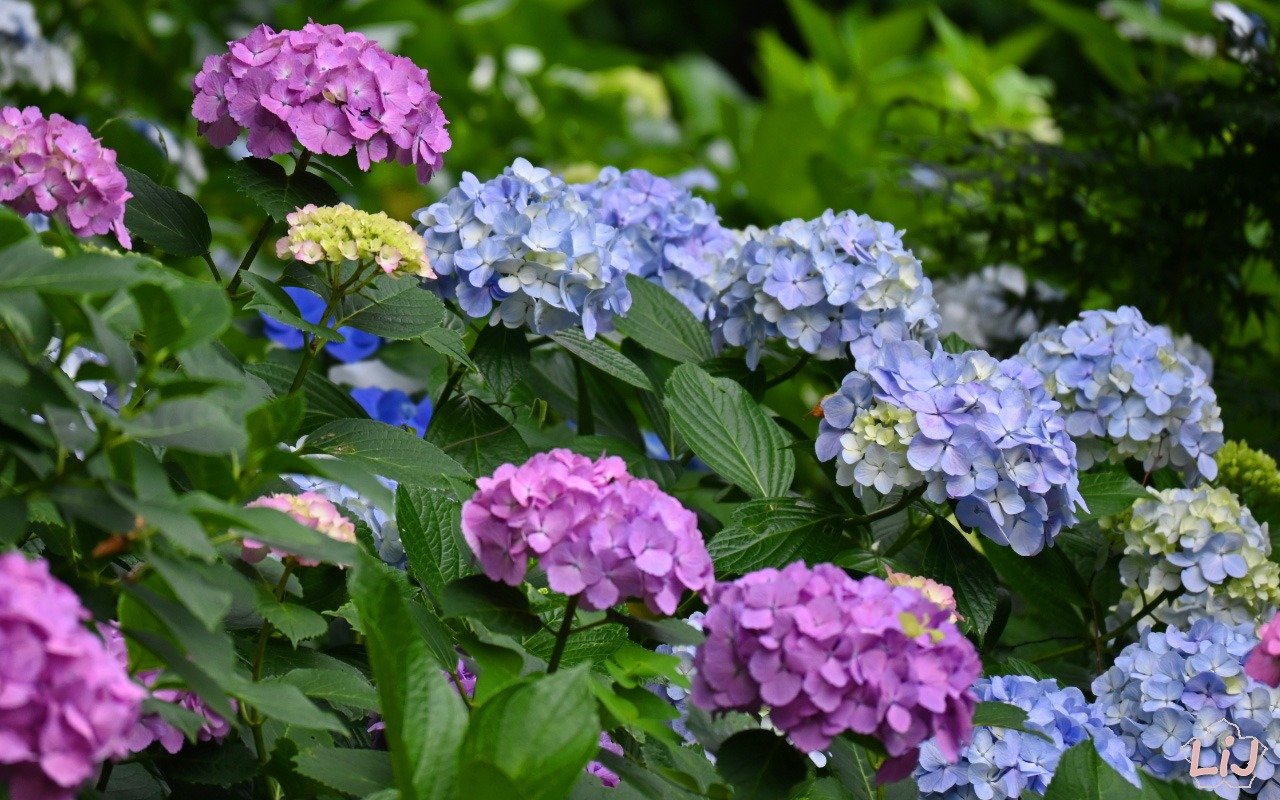
New cultivar developed in Aichi combines distinctive white-edged blooms, heat resilience and strong commercial potential ahead of Mother’s Day market demand
Aichi Prefecture, Japan’s largest hydrangea-producing region, has unveiled its first locally developed hydrangea variety, marking a significant milestone for one of the country’s most important ornamental horticulture sectors.
The new cultivar, named “Hydra Aichi No. 1,” is scheduled to enter commercial distribution next spring and is expected to strengthen the prefecture’s position in Japan’s competitive flower market.
Developed by the Aichi Agricultural Research Center in collaboration with local growers, the variety is the culmination of four years and eight months of research and breeding efforts aimed at creating a commercially attractive hydrangea capable of meeting strong seasonal demand, particularly during the Mother’s Day sales period.
The launch is notable because, despite Aichi’s dominance in hydrangea production, the prefecture had never before developed an original hydrangea variety of its own.
A Strategic Move for Japan’s Hydrangea Capital
Aichi occupies a unique position within Japan’s floriculture industry.
The prefecture benefits from abundant winter sunlight and relatively mild temperatures, creating ideal conditions for hydrangea cultivation. According to industry data, Aichi ranked first nationwide in cultivation area, shipment volume and production value for hydrangeas in 2023.
Yet until now, growers largely depended on varieties developed elsewhere.
The new cultivar represents a strategic effort to create proprietary plant genetics that can enhance competitiveness, improve grower profitability and differentiate Aichi’s products in both domestic and potentially international markets.
Thousands of Crosses, One Standout Variety
The breeding process reflected the increasingly sophisticated nature of modern ornamental horticulture.
Researchers generated 3,893 candidate varieties through crossbreeding, evaluating each for flower colour, plant form, growth performance and market appeal. The most promising selections were then subjected to extensive adaptability and performance trials before a final variety emerged.
The result is a hydrangea that combines aesthetic appeal with commercial durability.
Researchers say the plant demonstrates strong growth during Japan’s increasingly hot summers while producing stable and uniform flower clusters, traits that are becoming increasingly important as climate variability creates new challenges for ornamental crop producers.
Distinctive White-Edged Blooms
The defining feature of Hydra Aichi No. 1 is its striking flower appearance.
The cultivar belongs to the highly sought-after “temari yaezaki” category, known for its spherical flower heads composed of layered decorative florets.
Its blue or pink petals are framed by sharply defined white edges, creating a distinctive contrast that sets it apart from conventional hydrangea varieties.
Industry observers note that unique colour patterns have become increasingly important in Japan’s premium ornamental plant market, where consumers continue to seek novel and visually distinctive flowering plants.
A commercial brand name for retail distribution is currently being finalized.
Innovation in a Competitive Floriculture Market
The launch reflects a broader trend across the global ornamental plant industry, where regional breeding programs are increasingly focused on developing proprietary varieties that offer both visual differentiation and improved production characteristics.
For growers, ownership of locally adapted varieties can create new opportunities for branding, premium pricing and market exclusivity.
For Aichi, the introduction of its first homegrown hydrangea represents more than a horticultural achievement.
It signals a shift toward greater innovation within a sector that remains an important contributor to the prefecture’s agricultural economy.
As demand for premium ornamental plants continues to evolve, Hydra Aichi No. 1 may offer a glimpse into the future of Japan’s floriculture industry—one where regional identity, breeding innovation and market differentiation become increasingly central to growth and competitiveness.
