
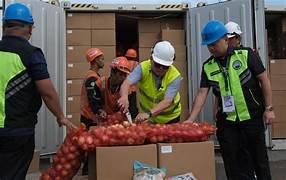
Authorities uncover nearly 13,000 boxes of undeclared vegetables concealed behind processed food imports as government intensifies crackdown on agricultural smuggling
Philippine authorities have intercepted more than P7 million worth of smuggled fresh carrots concealed inside shipments falsely declared as processed food products, highlighting the government’s escalating efforts to combat agricultural smuggling and protect both consumers and domestic farmers.
The seizure was made during a joint inspection operation at the Port of Manila involving the Department of Agriculture (DA), the Bureau of Customs (BOC), and the Bureau of Plant Industry (BPI).
Inspectors discovered 12,909 boxes of fresh carrots valued at over P7 million hidden behind cartons of egg noodles inside four container shipments that arrived in the country in March 2026 under a single consignee.
The cargo had been declared as assorted food items, including egg noodles, flat noodles, soya wrappers, fish tofu and wakame salad. However, a detailed physical inspection revealed a substantial volume of undeclared agricultural products concealed within the containers.
The operation was led by DA Assistant Secretary for Inspectorate, Enforcement and Legal Service Willie Ann Angsiy, alongside BPI Assistant Director Ruel Gesmundo and customs enforcement personnel.
Food Safety Risks Exposed
Beyond customs violations, authorities raised concerns over the condition of the seized vegetables.
Inspectors found that a significant portion of the carrots had already deteriorated, exhibiting visible signs of mold, decay and root damage. Officials said the vegetables were no longer fit for human consumption, underscoring the potential health risks posed by illegally imported agricultural products that bypass established inspection, quarantine and food safety protocols.
Agriculture officials warned that such shipments not only evade regulatory oversight but also create pathways for potentially contaminated or substandard products to enter the domestic food supply chain.
Economic Threat to Local Farmers
The seizure also highlights the broader economic consequences of agricultural smuggling.
According to the Department of Agriculture, illicit imports distort market conditions by allowing smugglers to avoid duties, taxes and regulatory compliance costs, enabling them to sell products at prices significantly below those of legitimate importers and domestic producers.
Officials said this creates unfair competition that can severely undermine the livelihoods of local farmers, particularly during periods of strong domestic harvests.
Agricultural authorities have repeatedly identified vegetable smuggling as one of the key factors contributing to market disruptions and price volatility across the country’s horticulture sector.
Enforcement Campaign Intensifies
The confiscated shipments have been formally forfeited in favor of the government for violations of the Customs Modernization and Tariff Act (CMTA).
In addition to customs penalties, the Department of Agriculture and the Bureau of Plant Industry are preparing administrative and legal actions under existing food safety and agricultural regulations against the individuals and entities involved.
Authorities said the consignee will be blacklisted from future import activities, while ongoing investigations are seeking to identify other parties connected to the operation.
Government agencies also confirmed that relevant licenses, registrations and accreditations linked to the shipment will be revoked as part of broader enforcement measures.
Part of a Broader Anti-Smuggling Drive
The interception forms part of a wider government campaign aimed at tightening border controls and strengthening oversight of agricultural imports.
Officials say agricultural smuggling remains a significant challenge, undermining food safety standards, reducing government revenues and placing additional pressure on domestic producers already facing rising production costs and climate-related challenges.
The latest seizure demonstrates increasing coordination between customs authorities and agricultural regulators as the government seeks to close loopholes in the import system and strengthen enforcement against illegal trade activities.
As authorities continue to expand inspections at key ports of entry, officials say protecting consumers and ensuring a level playing field for Filipino farmers remain central objectives of the country’s anti-smuggling strategy.
