
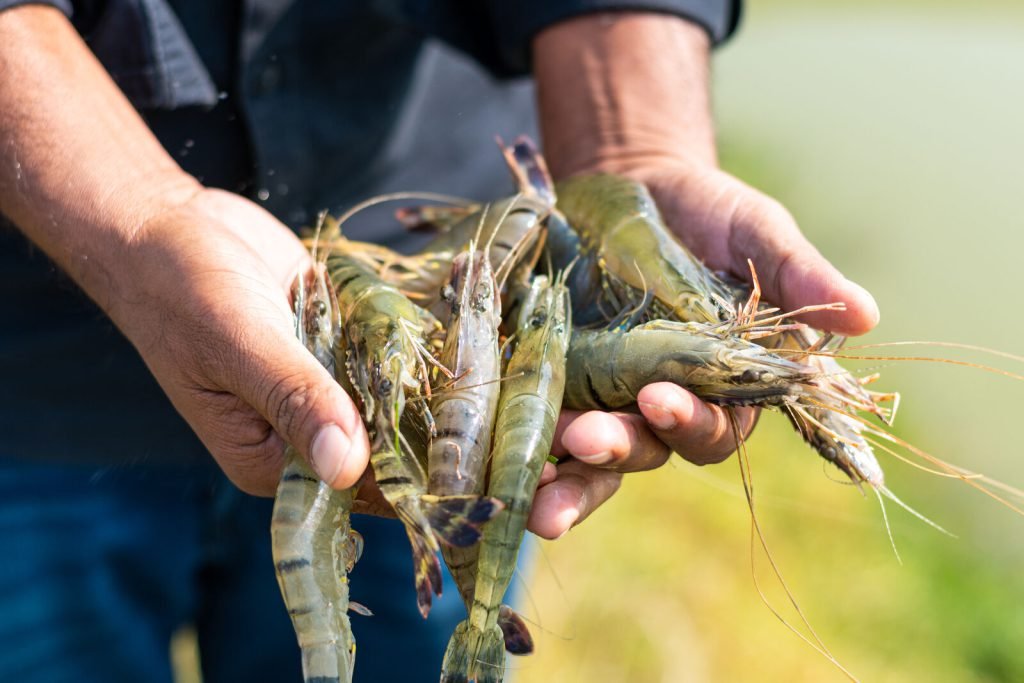
International certification strengthens supply-chain access, boosts farm productivity, and reinforces Vietnam’s leadership in sustainable shrimp production
A coastal rice-shrimp farming region in Vietnam’s An Giang province has secured internationally recognized Aquaculture Stewardship Council (ASC) certification, marking a significant milestone for the country’s sustainable aquaculture sector and opening new opportunities for local producers to participate in premium global seafood supply chains.
The certification covers approximately 818 hectares of rice-shrimp farming area involving 254 farming households in Dong Hoa commune, making it the first rice-shrimp production zone in An Giang to achieve ASC status.
The achievement reflects years of transformation across the farming community as producers shifted from traditional extensive aquaculture practices toward internationally benchmarked production systems focused on traceability, environmental stewardship, food safety and responsible farming.
Industry observers say the certification underscores the growing importance of sustainability credentials in global seafood trade, where buyers increasingly demand proof of environmental and social compliance alongside product quality.
From Traditional Farming to Global Standards
For many farmers, achieving ASC certification required a fundamental change in production practices rather than simply adopting new technologies.
Producers were required to implement strict protocols covering seed traceability, record keeping, water quality management and responsible input use while eliminating prohibited antibiotics and non-approved chemicals from production systems.
Every stage of the farming cycle—from pond preparation and stocking to harvesting—must be documented to ensure full traceability, a critical requirement for international seafood markets.
The transition has delivered measurable production gains.
According to participating farmers, shrimp yields have increased from approximately 250–300 kilograms per hectare per crop to between 350–450 kilograms per hectare, while product quality has improved significantly.
The gains highlight a growing trend within global aquaculture where sustainability standards are increasingly viewed not only as compliance requirements but also as tools for improving productivity and operational efficiency.
Certification Becomes a Market Passport
The significance of ASC certification extends far beyond farm-level improvements.
Seafood exporters increasingly view internationally recognized certifications as essential gateways to premium retail and foodservice markets in Europe, North America and Asia.
According to industry stakeholders, ASC remains one of the most rigorous aquaculture certification systems globally, encompassing more than 320 criteria covering environmental management, food safety, legal compliance, social responsibility, animal welfare and traceability.
While individual farmers focus on a smaller subset of production-related requirements, the broader certification framework relies on collaboration between producers, enterprises, local authorities and technical agencies.
Industry leaders describe this public-private partnership model as increasingly important for helping smallholder producers access high-value export markets.
Vietnam Strengthens Global Position
The certification comes as Vietnam continues to strengthen its position within the global sustainable seafood industry.
According to industry estimates, Vietnam currently ranks as the world’s second-largest producer of ASC-certified shrimp, behind Ecuador.
The country is widely regarded as the global leader in several eco-shrimp segments, including shrimp-rice, shrimp-mangrove and improved extensive black tiger shrimp production systems, which have attracted growing interest from international buyers seeking environmentally responsible seafood products.
For exporters, ASC-certified shrimp offers more than food safety assurances.
The certification increasingly serves as a market differentiator that demonstrates environmental responsibility, social accountability and sustainable livelihood support for farming communities—attributes that are becoming increasingly important in procurement decisions by multinational retailers and seafood brands.
Building a Sustainable Aquaculture Economy
Provincial authorities view the certification as part of a broader effort to modernize Vietnam’s aquaculture sector and transition farmers from fragmented smallholder production toward integrated, market-oriented value chains.
Local officials have indicated plans to expand certified aquaculture areas while strengthening linkages between farmers, processors and exporters to ensure long-term market access and value creation.
Future development strategies are expected to focus on scaling internationally certified farming systems, including ASC and GlobalGAP standards, while enhancing coordination across production, processing and distribution networks.
A Blueprint for Sustainable Growth
The success of Dong Hoa’s rice-shrimp zone highlights a broader shift occurring across global aquaculture as sustainability certifications increasingly become commercial necessities rather than voluntary credentials.
As consumer demand for responsibly sourced seafood continues to rise, producers capable of meeting international environmental and traceability standards are likely to secure stronger positions within global supply chains.
For An Giang’s farmers, the certification represents more than a compliance milestone. It signals entry into a higher-value segment of the seafood economy where sustainability, transparency and product quality are becoming key drivers of competitiveness.
For Vietnam’s shrimp industry, it reinforces the country’s ambitions to remain at the forefront of sustainable aquaculture while deepening its integration into premium international markets.
