
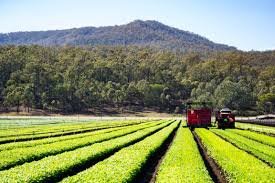
Council of Mayors South East Queensland backs coordinated approach to strengthen supply chains
Australia is being urged to rethink how it produces and distributes food, as a new strategy warns that fragmented planning will not be enough to withstand mounting pressures from climate change, population growth and global supply disruptions.
In a report released on April 21, CSIRO laid out a coordinated blueprint to secure the country’s food future, using South East Queensland (SEQ) as a test case for a broader national model. Developed with the Council of Mayors South East Queensland and local stakeholders, the strategy calls for a unified “food bowl” approach that integrates production, processing, logistics, consumption and waste.
Lead author Cathy Robinson said the shift toward system-wide planning is critical as traditional, piecemeal approaches struggle to keep up with increasingly complex challenges. SEQ, she noted, offers a high-stakes proving ground, with its population expected to surpass six million by 2046, placing intensifying strain on land, water and infrastructure.
The urgency is compounded by the region’s role as host of the 2032 Olympic and Paralympic Games, which is expected to drive a temporary surge in food demand and test the resilience of supply chains.
The strategy spans 11 local government areas—including Brisbane, Ipswich, Logan and the Sunshine Coast—and is designed to be replicated in other food-producing regions across Australia.
Beyond ensuring supply, the report underscores the broader economic and social role of the food system. Co-author Peggy Schrobback emphasized that food production underpins jobs, community wellbeing and access to nutritious diets, warning that even highly productive regions remain vulnerable if supply chains falter.
Local leaders echoed the need for coordinated action. Adrian Schrinner, chair of the Council of Mayors (SEQ), said the region has a unique opportunity to showcase its agricultural strengths on the global stage but must act now to ensure readiness.
The blueprint identifies three immediate priorities: safeguarding agricultural land and infrastructure to reinforce SEQ as a resilient food hub; scaling supply to meet population growth and major event demand; and building a globally competitive food innovation ecosystem through stronger links between research, industry and Indigenous knowledge.
Taken together, the report positions SEQ as both a warning and an opportunity—highlighting the risks of inaction while offering a scalable roadmap for securing Australia’s food system in an increasingly uncertain world.
