
Approval reinforces quality standards, boosts Thailand’s ambition as global seed hub
Bayer Thailand has received certification under the Quality Controlled Seed Collection Project (Q Factory) for its seed production facilities in Phitsanulok and Khon Kaen, marking a significant milestone in its efforts to strengthen high-quality seed production for domestic and export markets.
The recognition was conferred by the Department of Agriculture, Ministry of Agriculture and Cooperatives, which awarded a certificate of compliance and a plaque of honour to the company, underscoring its adherence to stringent standards in seed collection, inspection and production. The Q Factory certification is granted to facilities demonstrating excellence in safety, quality control, systematic production processes, as well as social and environmental responsibility.
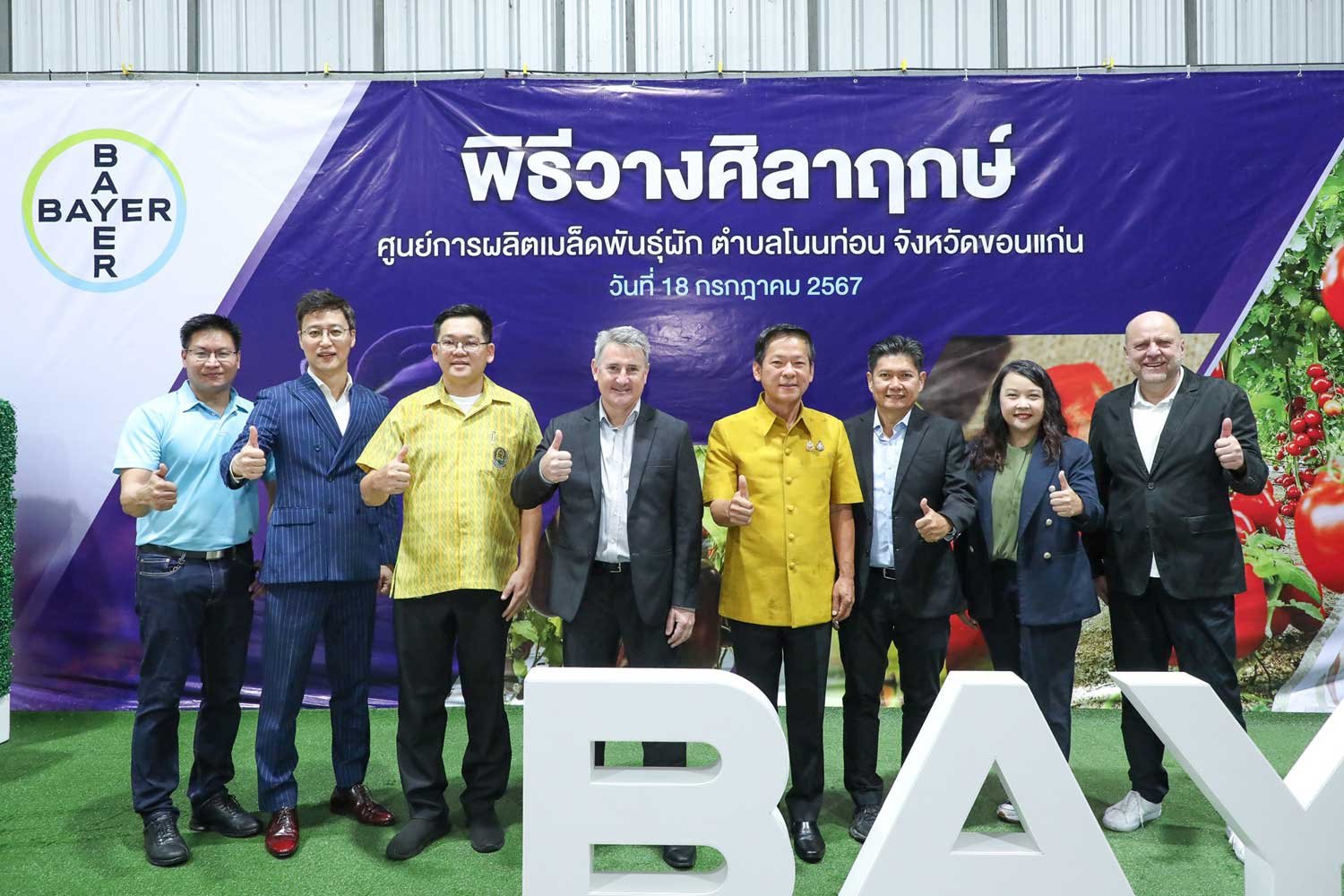
Bayer’s vegetable seed production centre in Khon Kaen operates as a fully integrated facility, managing the entire value chain from sourcing seeds through a nationwide farmer network to cleaning, pest control, coating, germination enhancement, automated packaging and laboratory-based quality testing. The facility is supported by modern temperature-controlled storage infrastructure and supplies seeds under global brands such as Seminis and De Ruiter to key international markets, including the United States, the Netherlands, China, Japan, South Korea, Southeast Asia, Australia and New Zealand.
The hybrid maize seed production centre in Phitsanulok produces seeds under the DEKALB brand for both domestic use and exports. Equipped with advanced pest testing and seed physiology laboratories, the centre has secured certifications from the Department of Agriculture in recent years, enabling faster issuance of phytosanitary and re-export certificates. This has helped reduce approval timelines and costs, enhancing the efficiency of seed exports.
The Q Factory certification highlights Bayer Thailand’s commitment to delivering high-quality seeds that support improved farm productivity and align with its global mission of “Health for all, Hunger for none.” It also supports the Thai government’s strategy to position the country as a leading tropical seed hub, reinforcing its role as a key seed production base in the Asia-Pacific region.
