
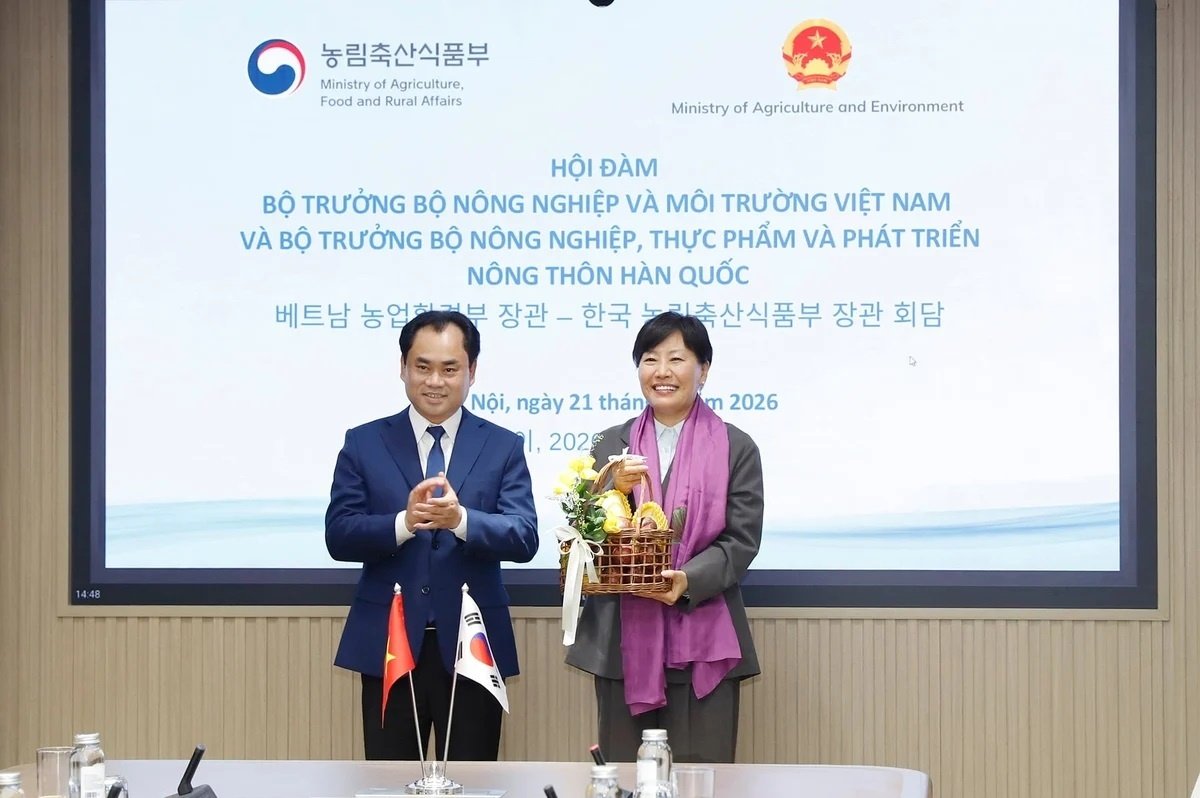
Talks focus on market access, disease control and ODA-Backed sector development
South Korea and Vietnam have moved to deepen their strategic agricultural partnership, with both sides agreeing to expand trade engagement, strengthen development cooperation and explore collaboration in emerging areas such as smart farming and agri-processing.
The discussions took place during a bilateral meeting between Song Miryung, Minister of Agriculture, Food and Rural Affairs of South Korea, and Trinh Viet Hung, Vietnam’s Minister of Agriculture and Environment, where both leaders emphasised the need to build a more robust and mutually beneficial agri-food trade ecosystem.
South Korea sought an extension of the permitted export window for its melons to Vietnam until June, from the current May deadline, citing rising consumer demand. Both sides acknowledged that differing climatic conditions between the two countries create complementary trade opportunities and agreed to continue dialogue to facilitate smoother market access.
The ministers also reviewed ongoing cooperation under official development assistance (ODA), with South Korea having supported Vietnam’s agricultural and rural sector since 2011, including initiatives such as the National Centre for Veterinary Diagnostics. Both countries agreed to further strengthen collaboration under ODA frameworks to support sectoral development.
Looking ahead, the two sides proposed convening the second meeting of the South Korea–Vietnam Agricultural Cooperation Committee, aimed at broadening bilateral engagement into high-growth areas such as smart agriculture, digital farming technologies and agricultural product processing.
Amid rising global concerns over animal health, particularly the spread of African swine fever, both ministers stressed the importance of coordinated efforts in vaccine research and the establishment of joint response mechanisms for transboundary animal diseases.
During his visit, Minister Miryung also assessed consumer trends in Vietnam’s retail market, engaging with stakeholders to better understand demand patterns for fresh produce and Korean food products, signalling growing interest in expanding agri-food trade ties.
The engagement reflects a broader effort by both countries to strengthen agricultural collaboration, enhance market linkages and build resilient, technology-driven farming systems.
