
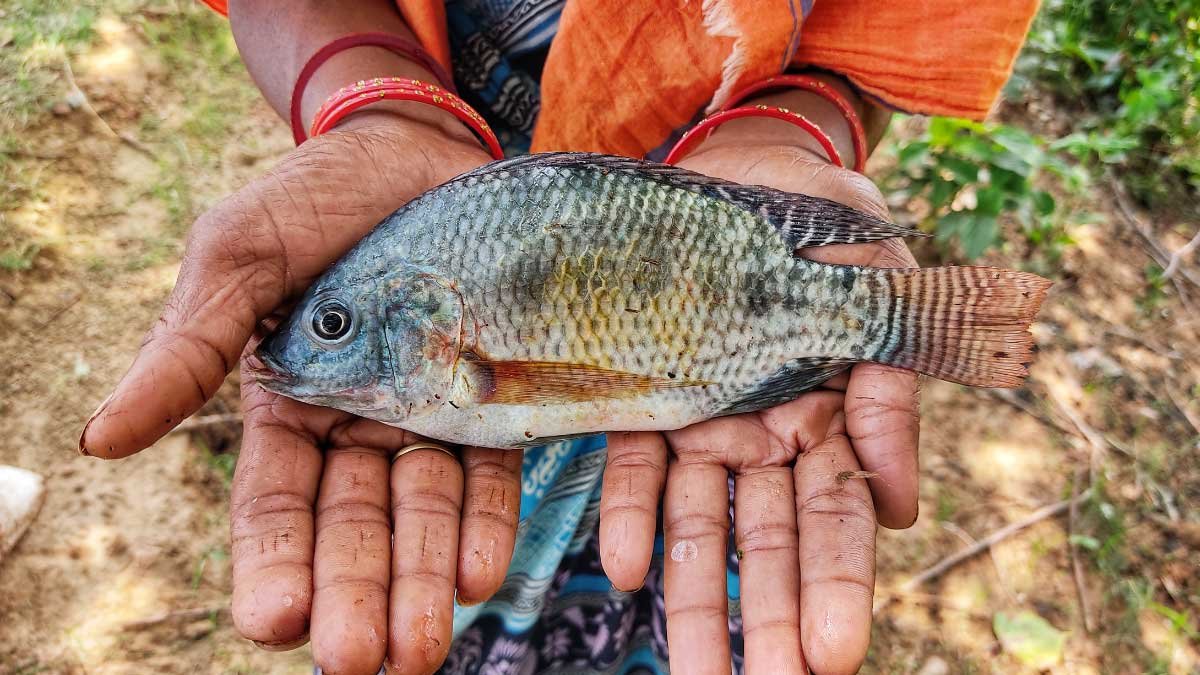
Follow-on investment in Victory Group signals rising conviction in Africa’s aquaculture thesis, as integrated fish-farming platforms race to meet surging protein demand across Kenya, Rwanda and beyond
In a calculated reinforcement of its long-term bet on Africa’s emerging blue-economy infrastructure, AgDevCo has committed a US$15 million follow-on investment into Victory Group, a vertically integrated East African aquaculture enterprise specialising in Nile tilapia production. The infusion of capital underscores a broader structural narrative: that fish farming is steadily evolving from a fragmented artisanal activity into a scalable, investment-grade protein industry anchored in food security imperatives and demographic expansion.
The financing, structured as mezzanine debt, is designed to accelerate the company’s regional expansion across Kenya and Rwanda, with additional early-stage positioning in Tanzania. At its core, the investment is intended to deepen production capacity, enhance distribution networks, and stabilise supply in markets increasingly characterised by protein deficits and volatility in wild fish stocks.
Victory Group’s operating model—spanning hatcheries, cage farming systems in Lake Victoria and Lake Kivu, processing infrastructure, and a distributed retail network—has been positioned as a vertically integrated response to structural inefficiencies in East Africa’s aquatic food systems. With wild catch volumes from the Great Lakes in long-term decline, regional consumption patterns have shifted decisively toward farmed fish, particularly affordable tilapia, which now functions as a critical protein staple for millions of low- and middle-income consumers.
AgDevCo’s latest commitment builds on an earlier US$4 million investment made in 2021, which the investor describes as having materially improved production efficiency and operational scale. The current expansion trajectory is expected to significantly increase output capacity, with projections indicating annual production targets in the region of 30,000 tonnes as new infrastructure comes online.
From an investment standpoint, the transaction reflects growing institutional confidence in aquaculture as a climate-resilient protein system—one capable of delivering both commercial returns and developmental impact. The model’s dual mandate is explicit: to improve affordability and access to high-quality protein while simultaneously generating employment across fragmented rural value chains, including small-scale traders who form the backbone of informal food distribution networks.
Industry observers note that East Africa’s aquaculture sector is now entering a phase of consolidation and capital intensity, driven by rising urban demand, declining capture fisheries, and increasing institutional participation from impact investors. In this context, Victory Group’s integrated production architecture is being positioned not merely as a corporate expansion, but as an infrastructure platform for regional food security.
As capital flows deepen into aquaculture systems across the continent, the AgDevCo–Victory Group transaction reflects a broader recalibration in agricultural investment logic: away from extractive models and toward vertically integrated, technology-enabled protein ecosystems designed to withstand climate stress while scaling nutritional access.
The underlying thesis remains unequivocal—fish is no longer simply a commodity; it is fast becoming strategic infrastructure in Africa’s evolving food economy.
