
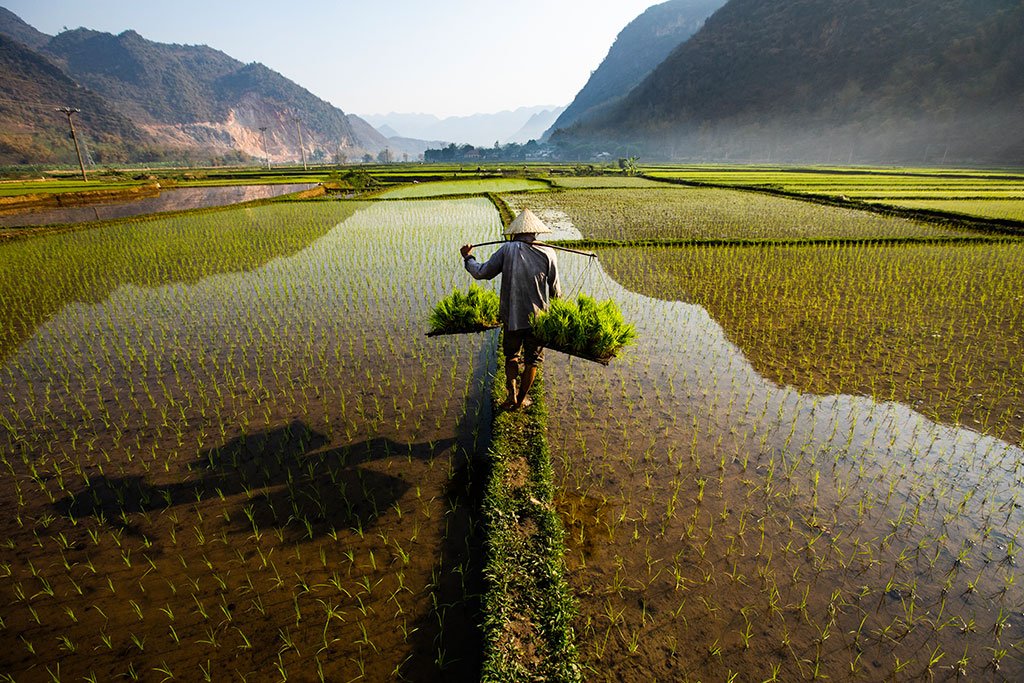
Multi-year supply agreement through April 2027 reinforces Vietnam’s dominance in regional rice markets amid tightening global supply, rising prices, and intensifying food security strategies across Southeast Asia
In a development of considerable strategic and commercial significance for regional food security architecture, Viet Nam has secured a multi-year agreement to export 1.5 million tons of rice to the Philippines, with shipments scheduled to be executed progressively through April 2027. The agreement, concluded on the sidelines of the ASEAN Summit in Cebu, further consolidates Vietnam’s position as a pivotal supplier within Southeast Asia’s increasingly interdependent grain ecosystem.
The deal, which includes a structured pricing mechanism for the DT8 rice variety at approximately $450 per ton, underscores not merely a transactional export arrangement but a longer-term alignment of agricultural supply security between two of ASEAN’s most food system-sensitive economies. For Vietnam, it represents a stabilised outlet in an era where climatic volatility, logistical disruptions, and inflationary pressures continue to redefine global rice trade dynamics.
The Philippines, Vietnam’s largest and most consistent rice importer, continues to anchor its procurement strategy in large-volume bilateral agreements designed to buffer domestic supply fluctuations and stabilise consumer prices. In doing so, Manila is effectively reinforcing Vietnam’s role as a structural supplier within the ASEAN rice corridor, where trade is increasingly shaped by policy coordination as much as by market forces.
This agreement arrives against a backdrop of firming rice prices in regional markets. Vietnam’s 5 per cent broken rice recently climbed to approximately $398 per ton, reflecting tightening supply conditions, while Thailand’s benchmark grade rose to around $405 per ton amid seasonal harvest constraints. By contrast, Indian rice prices remained comparatively subdued at $341 per ton, weighed down by weaker demand in select African markets.
The broader market environment is being shaped by a complex interplay of supply-side constraints and demand realignment. Climate variability continues to exert pressure on production cycles across Asia, while supply chain disruptions and freight uncertainties have added further volatility to trade flows. In this context, long-term bilateral contracts are increasingly emerging as instruments of stability rather than mere commercial preference.
Concurrently, the Philippines has experienced a marked increase in rice import activity, with volumes rising significantly in early 2026 even as global prices softened. Import duties collected on rice have also surged, providing a critical fiscal inflow to the country’s Rice Competitiveness Enhancement Fund—a programme designed to modernise domestic agriculture and improve productivity among local farmers.
However, this expanding reliance on imports has also necessitated a delicate balancing act for Philippine authorities, who continue to calibrate import volumes in order to prevent undue downward pressure on domestic paddy prices. Policy interventions, including temporary import suspensions and planned quota adjustments, reflect the ongoing tension between consumer affordability and farmer income protection.
For Vietnam, the agreement represents more than export security; it is a reaffirmation of its structural competitiveness in global rice markets. Despite broader headwinds from climate stress and global supply chain instability, Vietnamese rice continues to command strong demand across ASEAN and beyond, supported by consistent quality positioning and responsive trade diplomacy.
As regional food systems become increasingly interlinked, the Vietnam–Philippines agreement illustrates a larger truth: rice is no longer merely a commodity of agricultural exchange, but a strategic instrument of economic stability, political coordination, and food security governance in an era of intensifying global uncertainty.
