
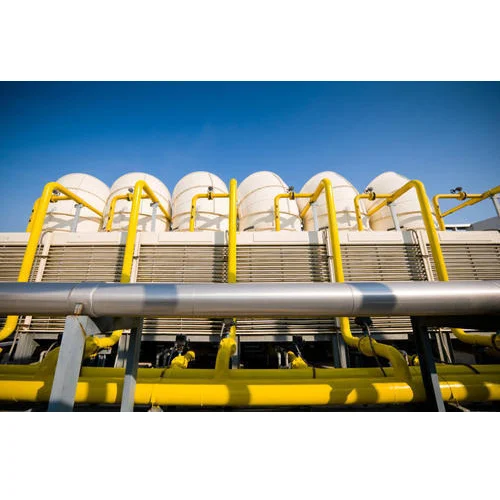
With fertilizer markets rattled by geopolitical disruptions, Loop Chemicals is positioning ammonia production closer to end users across the United States
As geopolitical instability once again exposes the fragility of global fertilizer markets, a new generation of climate-industrial startups is attempting to redraw the map of ammonia production—moving it away from sprawling centralized complexes and closer to the fields that ultimately depend on it.
Among the latest entrants is Loop Chemicals, a venture emerging from the Massachusetts Climatetech Studio, which has secured a license for advanced thermochemical looping ammonia technology developed by Sandia National Laboratories in collaboration with Arizona State University.
The company’s ambition is both industrial and strategic: to establish a distributed ammonia manufacturing platform capable of reshaping fertilizer production across rural America.
At the center of the effort lies a chemical looping process designed as a potential alternative to the century-old Haber–Bosch system that still dominates global ammonia synthesis. Conventional ammonia plants, while foundational to modern agriculture, are notoriously capital intensive and heavily centralized, requiring vast infrastructure, continuous feedstock supply, and complex logistics networks.
Loop Chemicals argues that its licensed technology could fundamentally alter that equation.
By deploying smaller, regionally situated production units nearer to agricultural demand centers, the company aims to reduce transportation burdens, mitigate supply-chain volatility, and shield farmers from the price shocks that have intensified amid the ongoing disruption surrounding the Strait of Hormuz.
The timing is notable.
Nitrogen fertilizer markets have become increasingly vulnerable to geopolitical turbulence, energy-price fluctuations, and export concentration risks, prompting policymakers and investors alike to revisit domestic production capacity as a matter of economic resilience as much as agricultural necessity.
Loop’s prototype development is being partially financed through a competitive grant from the Massachusetts Clean Energy Center, with technical guidance continuing from both Sandia and Arizona State. The forthcoming reactor demonstration will serve as an early proving ground for one of the venture’s central claims: that chemical looping can materially lower the capital intensity traditionally associated with ammonia manufacturing.
Beyond fertilizers, the company is already positioning ammonia within a broader decarbonization narrative.
Future phases of development envision ammonia not only as an agricultural input, but also as an emerging energy vector—capable of functioning as a carbon-free fuel, hydrogen carrier, and strategic storage medium for next-generation energy systems.
Dan Doble, Loop Chemicals’ co-founder and chief executive, framed the initiative as an effort to restore regional resilience to American agriculture by localizing ammonia production and reducing dependence on imported supply.
The company joins a widening cohort of distributed ammonia ventures—including Talusag and Shomax—that are seeking to commercialize modular, lower-carbon production systems tailored to rural markets.
For now, however, commercialization timelines remain undefined, and the economic viability of distributed ammonia manufacturing has yet to be demonstrated at scale. The prototype reactor phase will likely determine whether the technology can transition from laboratory promise to industrial relevance.
Still, amid mounting pressure to secure food systems while decarbonizing heavy industry, the appeal of localized ammonia production is becoming increasingly difficult for investors, policymakers, and agricultural markets to ignore.
