
Growing soybean meal commitments, a new partnership with PAFMI, and enhanced sustainability initiatives underscore the enduring strength of a 30-year relationship
The U.S. Soybean Export Council (USSEC) commemorated three decades of partnership between U.S. soybean producers and the Philippines, reaffirming a long-standing relationship that has played a pivotal role in supporting the country’s feed milling, livestock, poultry and aquaculture industries. The milestone celebration underscored the enduring importance of U.S. Soy in strengthening feed security, improving nutritional standards and fostering innovation across one of Southeast Asia’s fastest-growing animal protein markets.
The anniversary event was held alongside USSEC’s regional Feed Technology and Animal Nutrition Conference, which convened industry leaders, feed manufacturers, nutrition experts, researchers and policymakers from across East Asia to exchange insights on feed innovation, nutritional efficiency and sustainable production practices.
Bringing together representatives from government agencies, industry associations, feed companies, technical institutions and U.S. soybean farmers, the programme highlighted the shared commitment of both nations to advancing feed quality, responsible sourcing, supply chain resilience and long-term industry development.
A Partnership Anchored in Trust and Performance
For over thirty years, U.S. Soy has remained a trusted supplier to the Philippine feed sector, consistently delivering high-quality soybean meal that has become a critical ingredient in the country’s livestock and aquaculture value chains.
The strength of this relationship is reflected in current trade performance. During the ongoing crop year, U.S. soybean meal commitments from the Philippines have surged by 53 per cent, representing an increase of more than one million metric tonnes. The development reinforces the confidence Philippine buyers continue to place in the nutritional value, digestibility and performance of U.S. Soy products.
The Philippines has maintained its position as the largest export destination for U.S. soybean meal for nine consecutive years, a testament to the role U.S. Soy plays in supporting the country’s growing demand for animal protein.
Industry observers note that demographic trends—including a young and expanding population, rising household incomes and robust consumption of pork and poultry products—continue to drive growth across the feed and livestock sectors, further strengthening the strategic relevance of the Philippines within the global U.S. Soy export landscape.
USSEC also acknowledged the longstanding support of the United States Department of Agriculture’s Foreign Agricultural Service (USDA-FAS), whose collaboration over the past three decades has facilitated market development, technical cooperation and agricultural trade engagement between the two countries.
Commenting on the milestone, Carlos Salinas, Executive Director – East Asia, USSEC, said the partnership has been built on a foundation of reliability, consistency and shared aspirations for industry advancement.
“For thirty years, U.S. Soy has been a trusted partner to the Philippines. Our collaboration has always been rooted in dependable supply, strong industry relationships and a mutual commitment to continuous improvement. With soybean meal commitments rising significantly this year, we look forward to further supporting the growth and competitiveness of the Philippine feed and livestock sectors through the quality and consistency that U.S. Soy is known for,” he said.
Strengthening Institutional Collaboration
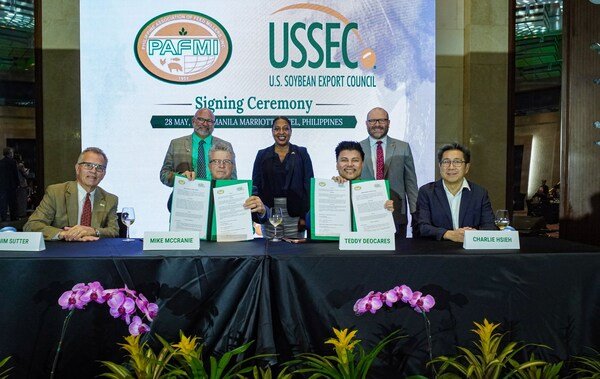
As part of the anniversary celebrations, USSEC and the Philippine Association of Feed Millers, Inc. (PAFMI) formalised a new Memorandum of Understanding (MoU), reaffirming their shared commitment to advancing the country’s feed industry.
The agreement establishes a framework for deeper collaboration across key areas including feed formulation, nutritional research, quality enhancement, supply chain transparency and sustainability verification through U.S. Soy programmes.
According to industry leaders, the partnership is expected to facilitate greater technical exchange and knowledge-sharing while supporting the continued modernisation of the Philippine feed manufacturing sector.
Jim Sutter, Chief Executive Officer of USSEC, emphasised the importance of the collaboration in strengthening food security and improving industry competitiveness.
“PAFMI occupies a central role in advancing feed quality and supporting food security in the Philippines. This agreement reflects our shared commitment to building a modern, efficient feed industry while ensuring manufacturers have access to a reliable and high-quality supply of U.S. Soy. Equally important, it provides access to sustainability-verified products that align with the country’s long-term agricultural and environmental objectives,” he noted.
Sustainability Moves to the Forefront
Beyond trade and nutrition, sustainability emerged as a central theme of the anniversary programme.
USSEC highlighted the increasing adoption of climate-smart agricultural practices by U.S. soybean farmers, aimed at enhancing productivity while reducing environmental impact. Sustainability assurance initiatives such as the U.S. Soy Sustainability Assurance Protocol (SSAP) and the Sustainable U.S. Soy (SUSS) programme continue to gain traction among international buyers seeking greater traceability and responsible sourcing standards.
Today, more than 95 per cent of U.S. Soy exports to the Philippines are accompanied by SSAP verification, reflecting the growing importance of sustainability credentials within global agricultural supply chains.
The organisation noted that these programmes are helping feed manufacturers respond to evolving market expectations around carbon footprint reduction, transparency and environmental stewardship, while simultaneously improving supply chain resilience.
Positioned for the Next Phase of Growth
The outlook for the Philippine feed sector remains highly promising. Industry projections indicate that total feed consumption in the country could expand by 32 per cent by 2035, driven by continued growth in poultry, livestock and aquaculture production.
Poultry feed demand is expected to rise by 37 per cent over the same period, while aquaculture feed demand is projected to increase by 28 per cent, underscoring the sustained need for high-quality protein ingredients.
Against this backdrop, USSEC believes opportunities for technical collaboration, sustainability engagement and market development will continue to expand.
As the Philippine feed and animal protein industries evolve, the next phase of the U.S. Soy–Philippines partnership is expected to focus on accelerating feed innovation, strengthening scientific and technical exchange, enhancing sustainability adoption and ensuring long-term supply chain reliability.
Three decades after the partnership first began, both sides appear united by a common objective: building a more productive, resilient and sustainable future for Philippine agriculture and food production.
