
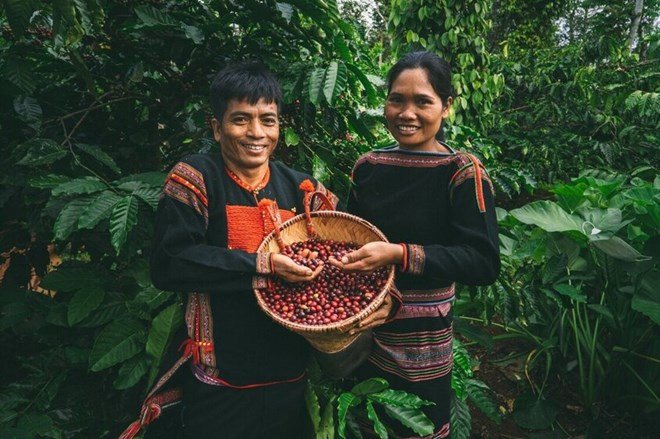
National Geographic’s ‘Best of the World 2026’ recognition elevates Vietnam’s coffee capital as a premier gastronomic destination, spotlighting the Central Highlands’ rich cultural heritage and globally acclaimed coffee legacy
In a development that underscores the growing international stature of Vietnam’s coffee economy and culinary tourism sector, Buon Ma Thuot—the beating heart of the country’s coffee industry—has been named among National Geographic’s “Best of the World 2026” culinary destinations, placing the Central Highlands city alongside some of the most celebrated food and cultural hotspots on the planet.
The recognition, announced by the Dak Lak Department of Culture, Sports and Tourism, marks a significant milestone in Vietnam’s efforts to position its coffee heritage as a global cultural and tourism asset. National Geographic’s annual “Best of the World” list is regarded as one of the travel industry’s most influential endorsements, reaching millions of readers and travelers worldwide.
For Buon Ma Thuot, the accolade is about far more than coffee production. It represents the culmination of years of efforts to transform a commodity into a cultural identity and a regional economic engine.
Situated in Dak Lak Province, Buon Ma Thuot accounts for roughly 30 percent of Vietnam’s coffee production and has long been recognized as the country’s coffee capital, particularly renowned for its premium-quality Robusta beans. Yet what distinguishes the city is not merely the scale of its output but the way coffee permeates nearly every aspect of local life.
Coffee in Buon Ma Thuot is not simply cultivated; it is lived.
From plantation tours and artisanal roasting experiences to traditional coffee ceremonies practiced by the E De, M’nong, and other indigenous ethnic communities, the beverage has evolved into a cultural bridge connecting agriculture, heritage, and tourism. Visitors are increasingly drawn not only by the opportunity to sample some of the world’s finest Robusta coffee but also by the chance to immerse themselves in the stories, traditions, and communities that have shaped the region’s coffee identity over generations.
The city’s ambitions are further reflected in landmark institutions such as the World Coffee Museum, widely regarded as one of Southeast Asia’s most distinctive cultural attractions dedicated to coffee history, innovation, and global coffee civilizations.
The international recognition also reinforces the growing value of the “Buon Ma Thuot Coffee” geographical indication, which is now protected across more than 30 countries and territories. The designation serves as a testament to the unique characteristics imparted by the region’s fertile basaltic soils and favorable growing conditions, while simultaneously strengthening the global reputation of Vietnamese coffee in increasingly competitive international markets.
For Dak Lak Province, the accolade aligns closely with a broader strategic vision: transforming Buon Ma Thuot into the “Coffee City of the World.” Over the years, local authorities have sought to balance tourism development with the preservation of indigenous cultural traditions, ensuring that economic growth remains rooted in the region’s distinctive identity.
Industry observers view National Geographic’s endorsement as a powerful catalyst that could accelerate international tourism flows, attract greater investment into hospitality and cultural infrastructure, and enhance global awareness of Vietnam’s specialty coffee sector.
“The recognition by National Geographic is a source of pride not only for Buon Ma Thuot and Dak Lak Province, but for Vietnam as a whole,” said Nguyen Son Hung, Head of the Tourism Management Division under the Dak Lak Department of Culture, Sports and Tourism.
Beyond the immediate tourism benefits, the recognition signals a broader shift in how agricultural regions can leverage origin, storytelling, and cultural heritage to create higher-value economic opportunities. In Buon Ma Thuot’s case, coffee is no longer viewed solely as an export commodity; it has become the foundation of a destination brand with global resonance.
As international consumers increasingly seek authentic experiences tied to food, culture, and sustainability, Buon Ma Thuot’s ascent onto the world culinary stage demonstrates how agricultural heritage can be transformed into a compelling tourism narrative—one that serves both economic development and cultural preservation.
For Vietnam’s coffee industry, the message is unmistakable: the future may be brewed not only in plantations and processing facilities, but also in the stories that connect a cup of coffee to the land, people, and traditions from which it originates.
