
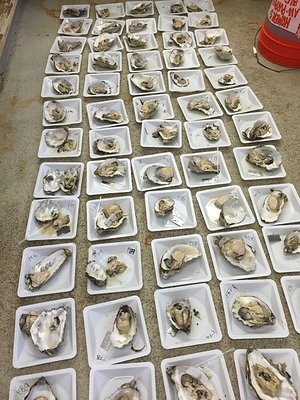
Hawaiʻi Angels and Blue Startups back aquaculture innovator scaling hybrid oyster and clam breeding technologies
Pacific Hybreed, a Hawaiʻi-based aquaculture biotechnology company, has announced the successful close of a $1 million funding round led by participation from Hawaiʻi Angels and Blue Startups, marking a significant milestone in the company’s efforts to scale resilient shellfish production across North America.
The fresh capital will support the expansion of Pacific Hybreed’s commercial-scale hatchery operations as the company responds to growing demand from shellfish farmers across Hawaiʻi, the US West Coast, and other key aquaculture markets.
Headquartered on Hawaiʻi’s Big Island, Pacific Hybreed is pioneering the commercialisation of hybrid breeding technologies in shellfish farming, applying the concept of “hybrid vigor” — widely used in traditional agriculture — to oysters and clams.
The company’s approach relies on advanced non-GMO selective breeding techniques to develop high-performance shellfish seed tailored to specific farming environments, helping growers improve survival rates, increase yields, and reduce operational costs.
Unlike genetic modification, Pacific Hybreed’s breeding model builds upon conventional breeding practices to produce more resilient and uniform shellfish seed capable of performing reliably under challenging environmental conditions.
Shellfish farming remains one of the more vulnerable segments within aquaculture, with growers frequently experiencing substantial crop losses due to environmental stress, inconsistent seed quality, and variable growth performance.
Pacific Hybreed aims to address these challenges at the source by delivering robust and uniform seed stock engineered for improved resilience and operational efficiency.
According to the company, its oyster seed has demonstrated approximately 30 per cent higher yields alongside reductions of up to 50 per cent in harvesting costs due to more consistent and uniform growth patterns.
By delivering these productivity gains at commodity-level pricing, Pacific Hybreed enables farmers to improve profitability and production output without requiring significant changes to existing farming infrastructure or practices.
The company is currently working with more than 20 commercial farm customers and research sites across North America, with demand for its shellfish seed continuing to outpace current production capacity.
Dave Anderson, Product Manager at Kauai Sea Farm, said Pacific Hybreed’s seed consistently delivered more uniform growth and reduced occurrences of double-set oysters, an important advantage for shellfish farming operations in Hawaiʻi where labour-intensive growing conditions make seed quality especially critical.
Melissa DellaTorre, Chief Executive Officer of Pacific Hybreed, said the successful funding round marks an important transition from proven field validation to scaled commercial production at a pivotal stage for the aquaculture industry.
She noted that support from Hawaiʻi Angels and Blue Startups reflects strong confidence in both the company’s commercial potential and its long-term impact on sustainable seafood production.
Pacific Hybreed plans to utilise the investment to expand hatchery production capacity, enhance its farm-specific breeding programmes, and accelerate development into additional shellfish species beyond Pacific oysters, including clams.
Rajeev Rai, Hawaiʻi Angels member and lead investor in the funding round, described the company as an innovator addressing one of the most critical bottlenecks in aquaculture.
He noted that improving shellfish survival and productivity at the seed level can significantly strengthen farm economics while enhancing the resilience and sustainability of the broader seafood supply chain.
With global demand for sustainable seafood continuing to rise, Pacific Hybreed is positioning itself at the forefront of next-generation aquaculture innovation by combining advanced breeding science with scalable commercial production solutions aimed at improving efficiency, resilience, and long-term food security.
