
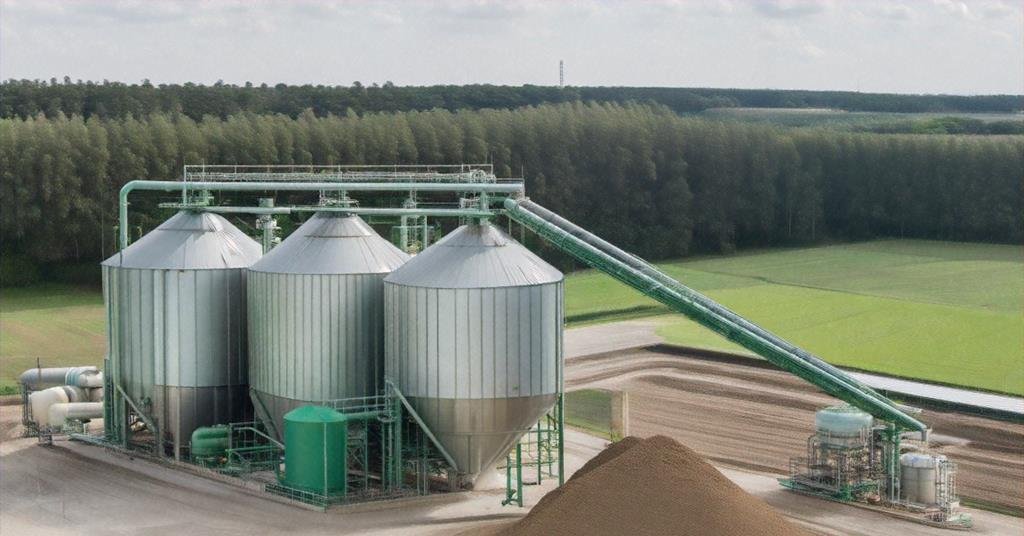
Renewable energy-driven project to deliver industrial-scale decarbonization in agriculture inputs
In a landmark moment for the global transition toward low-carbon industrial agriculture, ATOME PLC has announced Final Investment Decision (FID) on its $665 million green fertilizer facility in Villeta, Paraguay — a pioneering project widely regarded as the world’s first industrial-scale low-carbon calcium ammonium nitrate (CAN-27) plant to reach this stage of development.
The milestone is underpinned by a fully secured 10-year binding offtake agreement with global fertilizer leader Yara International, ensuring the entire production output of 260,000 tonnes per year will be marketed under Yara’s Climate Choice portfolio.
The project represents a structural shift in fertilizer production economics and emissions intensity, utilizing 100 per cent renewable baseload hydropower sourced from Paraguay’s Itaipu Dam — one of the largest hydroelectric facilities in the world — co-operated with Brazil. This renewable energy backbone insulates production from fossil fuel volatility, particularly the price shocks associated with global natural gas disruptions and geopolitical instability in major energy corridors.
At the core of the Villeta facility is a simple but transformative proposition: decoupling nitrogen fertilizer production from fossil fuels while maintaining industrial-scale output for global agricultural markets.
The plant will be engineered by Swiss industrial firm Casale SA under a fixed-price, lump-sum EPC contract, providing construction certainty and cost predictability for the development phase.
Financing for the project reflects strong multilateral confidence in green industrial infrastructure. A $420 million debt package is being coordinated by development finance institutions including IDB Invest, the International Finance Corporation, the European Investment Bank, FMO (Dutch development bank), and the Green Climate Fund. Equity investment of $245 million is led by Hy24, a major low-carbon hydrogen asset manager, underscoring the project’s alignment with the emerging hydrogen-based industrial ecosystem.
Construction is scheduled to commence shortly following shareholder ratification, with commercial operations targeted no later than October 2029. Over its operational lifespan, the facility is projected to abate approximately 500,000 tonnes of CO₂ equivalent annually, positioning it as a significant contributor to global agricultural decarbonization efforts.
Commenting on the announcement, ATOME leadership described the decision as a defining milestone for the company and a potential blueprint for replicable clean fertilizer production in emerging markets with abundant renewable energy resources and high dependence on imported fertilizers.
The Villeta project arrives at a pivotal moment for global agriculture, as farmers and governments increasingly face pressure to reduce emissions intensity while maintaining food security and fertilizer affordability.
By leveraging renewable hydropower to produce essential nitrogen fertilizers at scale, the project signals a broader transformation underway in the agricultural inputs sector — one where industrial chemistry, renewable energy, and global food systems converge.
With its secured offtake, multilateral backing, and long-term production certainty, the ATOME Villeta plant stands as a flagship example of how decarbonization is moving from concept to concrete industrial deployment across the global fertilizer value chain.
