
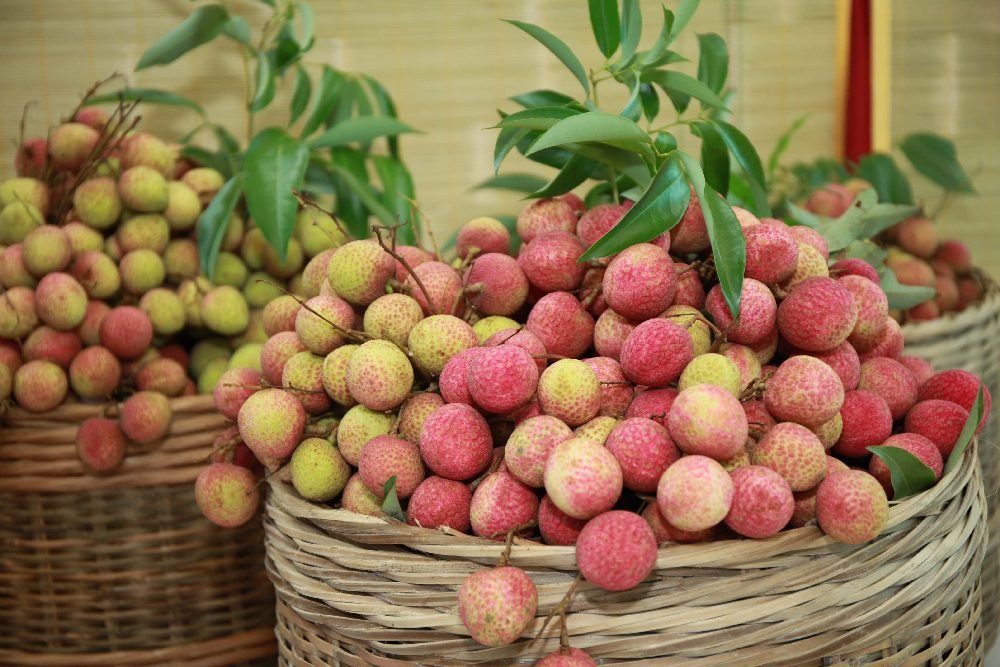
Bac Ninh authorities commit to improving logistics, warehousing, and administrative procedures to support smooth lychee exports
Vietnam and China are stepping up agricultural trade facilitation efforts with plans to establish a dedicated “green lane” mechanism to accelerate the export of Thieu lychees from Bac Ninh province, amid growing demand for Vietnamese fruit in the Chinese market.
The initiative was highlighted at a conference on promoting the consumption of Thieu lychees and key agricultural, specialty, and OCOP products from Bac Ninh for 2026, where provincial authorities reaffirmed their commitment to streamlining administrative procedures and strengthening logistics infrastructure to support faster cross-border trade flows.
The Bac Ninh Provincial People’s Committee said it would work closely with relevant Vietnamese agencies and Chinese authorities to optimise customs clearance processes at major border gates, including Bang Tuong and Ha Khau. The province also pledged to enhance warehouse systems, logistics efficiency, and regulatory coordination to ensure smoother export operations during peak harvest seasons.
Officials described the proposed “green lane” arrangement as part of a broader effort to position Bac Ninh as a reliable and responsive agricultural export hub. The provincial government emphasised its commitment to providing the most efficient administrative environment possible for agricultural exporters, particularly for high-demand seasonal produce such as lychees.
Alongside trade facilitation, Bac Ninh authorities reiterated their focus on agricultural innovation and long-term competitiveness. The province is encouraging research into advanced cultivation techniques, biotechnology applications, and off-season production models aimed at improving yield quality and extending harvest periods for Thieu lychees.
Industry stakeholders in China have also noted rising interest in Vietnamese lychees, with traders in Guangdong highlighting their superior quality compared to locally grown varieties. Vietnamese lychees are currently exported in both fresh and processed forms, with dried lychees gaining increasing popularity in the Chinese market due to their longer shelf life and compatibility with tea consumption culture.
According to Chinese business representatives, improved logistics infrastructure now enables lychees to be transported over long distances—exceeding 2,000 kilometres—while maintaining freshness and quality comparable to newly harvested fruit. This logistical efficiency has significantly expanded distribution reach across major Chinese cities, including northern consumption hubs.
The Chinese Embassy in Vietnam has also confirmed sustained demand for Vietnamese lychees, noting that Bac Ninh produces approximately 10,000 tonnes annually, with nearly half exported to China. Officials indicated that demand from Chinese importers remains stable and may be increasing compared to previous years.
Bac Ninh currently maintains a structured export system supported by 241 plantation codes covering more than 17,450 hectares, ensuring compliance with international phytosanitary and quality standards. Of this, China accounts for the majority of certified growing areas, reflecting its position as the primary export destination for the province’s lychee production.
In addition, the province operates 42 certified packaging facilities, of which 38 are authorised for exports to China, while others serve markets including the United States, Thailand, Japan, and Australia. These facilities form a critical part of Bac Ninh’s export infrastructure, supporting compliance, traceability, and quality assurance across multiple international markets.
The proposed green lane mechanism is expected to further strengthen cross-border agricultural trade efficiency, reduce clearance bottlenecks, and enhance the competitiveness of Vietnamese fruit exports in high-demand markets such as China.
