
Newly launched Working Group aims to strengthen agricultural cooperation, technology transfer, and capacity-building among developing nations
Vietnam has formally launched a dedicated South-South Cooperation Working Group in Agriculture, marking what officials described as the world’s first unified government-level coordination mechanism specifically designed to strengthen agricultural cooperation among countries of the Global South.
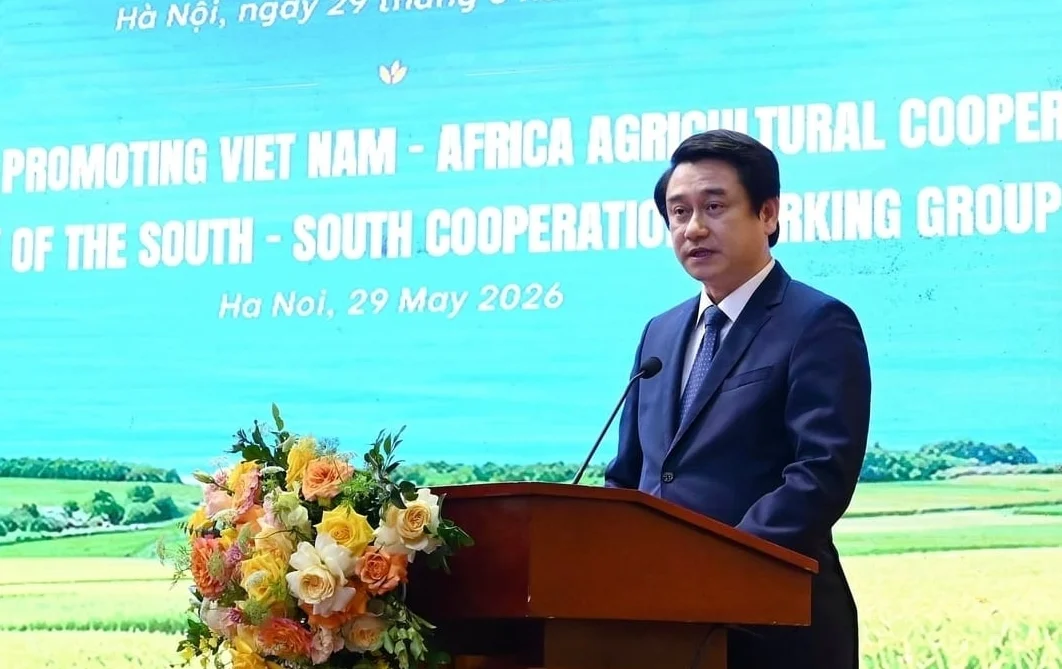
The initiative was officially introduced during the “Meeting on Promoting Vietnam-Africa Agricultural Cooperation,” organised by the Ministry of Agriculture and Environment on May 29. The event brought together more than 150 representatives from diplomatic missions, international organisations, development agencies, research institutions, businesses, and agricultural experts from both domestic and international sectors.
Vietnamese authorities described the initiative as part of a broader strategy to expand international agricultural cooperation through practical knowledge-sharing, technology transfer, and capacity-building partnerships among developing nations facing similar economic and environmental challenges.
Speaking at the event, Deputy Minister of Agriculture and Environment Hoang Trung emphasised that South-South cooperation is increasingly emerging as an effective development model because it focuses not on one-way aid but on the exchange of practical experience, adaptable technologies, and scalable agricultural solutions among countries with comparable conditions.
According to the ministry, the newly established Working Group aims to create a unified coordination framework capable of mobilising domestic and international resources while strengthening institutional connectivity across sectors. The mechanism is expected to facilitate more systematic and implementation-oriented agricultural cooperation programmes between Vietnam and partner countries, particularly across Africa.
Vietnam’s Ministry of Foreign Affairs also reaffirmed its support for the initiative, highlighting the long-standing diplomatic and developmental ties between Vietnam and African nations. Officials noted that agriculture has consistently remained a cornerstone of bilateral cooperation, driven by shared aspirations related to food security, self-reliance, and sustainable economic development.
The Working Group has outlined six strategic areas of focus for future cooperation. Initial priorities will include rice and food crop development, coffee production, fisheries, livestock, forestry, climate adaptation, agricultural extension systems, small-scale irrigation, and agricultural value chain development.
Authorities also plan to establish a dedicated network of Vietnamese experts for South-South cooperation, bringing together scientists, policymakers, agricultural extension specialists, technical professionals, and private-sector participants with practical field experience.
Another key objective will be the promotion of trilateral cooperation models involving Vietnam, recipient countries, and international development partners. Under this framework, Vietnam would contribute expertise and technical solutions, partner countries would define implementation needs, while donors and international organisations would support financing, governance mechanisms, and sustainability standards.
The initiative also seeks to expand the participation of Vietnamese businesses in agricultural cooperation projects across Africa and other developing regions. Officials indicated that the Working Group will function as a platform to connect enterprises with international partners, investment opportunities, and market-oriented collaboration programmes.
In parallel, Vietnam plans to strengthen regular coordination with African embassies, Vietnamese diplomatic missions abroad, and relevant domestic ministries and provincial authorities to ensure that cooperation projects remain aligned with the developmental priorities of partner nations.
Over the longer term, the ministry envisions building a comprehensive South-South agricultural cooperation ecosystem encompassing expert networks, project databases, financing mechanisms, pilot programmes, enterprise directories, and continuous dialogue platforms linking governments, businesses, research institutions, and international organisations.
Vietnamese officials said the initiative reflects the country’s broader ambition to position itself as an active contributor to sustainable agricultural development within the Global South while simultaneously expanding the international reach of its own agricultural expertise and development experience.
