
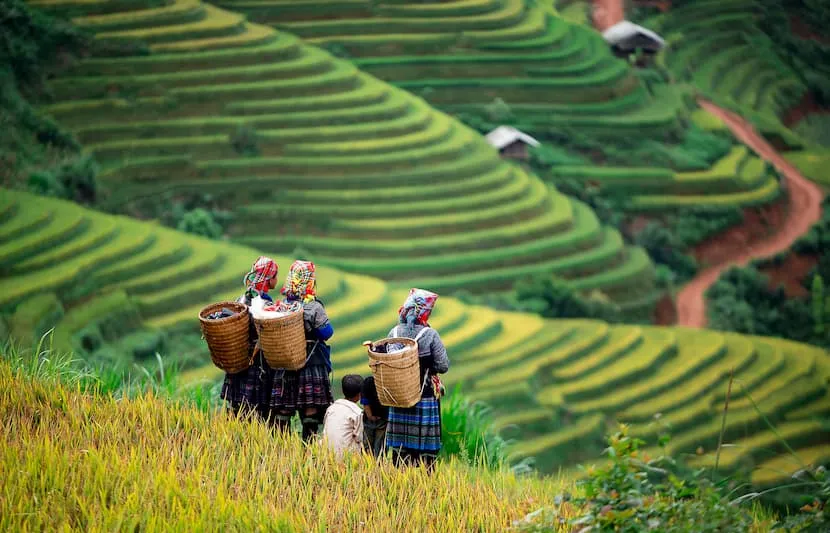
Strategic push aligns biodiversity advantages with green economy goals and international collaboration
Lai Châu Province is moving to accelerate its transition toward a green agricultural economy, convening policymakers, scientists, and businesses at a two-day conference focused on commodity agriculture and medicinal plant development. The event, scheduled for April 23–24, signals a broader strategic push to transform the north-western region’s fragmented production systems into scalable, high-value supply chains aligned with sustainability goals.
Set against the backdrop of rising demand for environmentally responsible agriculture, the conference is designed as both a policy forum and a marketplace connector. It brings together 250–300 in-person delegates and several hundred virtual participants, including government officials, research institutions, and private-sector stakeholders, to align on long-term development pathways and near-term investment opportunities.
At the core of Lai Châu’s strategy is the integration of medicinal plant cultivation into a broader green economy framework. The province’s diverse microclimates and rich biodiversity have enabled the development of niche, high-value crops such as tea, macadamia, cinnamon, and specialty rice. Among these, ginseng has emerged as a flagship product, supported by national-level prioritization and local policy initiatives aimed at conservation, cultivation, and commercialization.
Officials are positioning medicinal plants not only as an agricultural asset but as a catalyst for rural income growth and economic diversification. However, scaling this opportunity requires overcoming persistent bottlenecks, including fragmented landholdings, limited processing infrastructure, and weak market linkages. The conference is expected to address these constraints by promoting coordinated investment, technology transfer, and supply chain integration.
A significant component of the event is its focus on value chain development, with discussions centered on raw material zone expansion, deep processing capabilities, logistics optimization, and branding strategies. The inclusion of an exhibition featuring approximately 50 booths of certified and traceable agricultural products underscores the province’s effort to bridge producers with domestic and international buyers.
The initiative also reflects a broader shift toward circular economy principles and climate-resilient agriculture. By emphasizing efficient resource use, emissions reduction, and sustainable production practices, Lai Châu aims to align its agricultural sector with global environmental standards while enhancing competitiveness.
Partnerships are expected to play a critical role in this transformation. The conference will facilitate the signing of multiple memoranda of understanding between government agencies, research institutions, and enterprises, focusing on areas such as raw material development, processing technologies, and market access. International collaboration, particularly with partners in South Korea and Japan, is also being pursued to accelerate innovation and market expansion in the medicinal plant segment.
As the province advances its 2025–2030 development agenda, the conference represents a key inflection point. By consolidating its natural advantages with policy support and private-sector engagement, Lai Châu is seeking to reposition itself as a hub for sustainable, high-value agriculture in Vietnam’s mountainous regions, while laying the groundwork for long-term participation in global green supply chains.
