
Thai Nguyen seeks expanded cooperation on climate adaptation, carbon credits, agricultural resilience, and infrastructure protection
In a powerful demonstration of deepening international cooperation on climate resilience and disaster recovery, Australia and the United Nations Development Programme (UNDP) have expanded their strategic engagement with Vietnam’s Thai Nguyen Province, reinforcing a broader regional push toward sustainable rehabilitation and long-term climate adaptation.
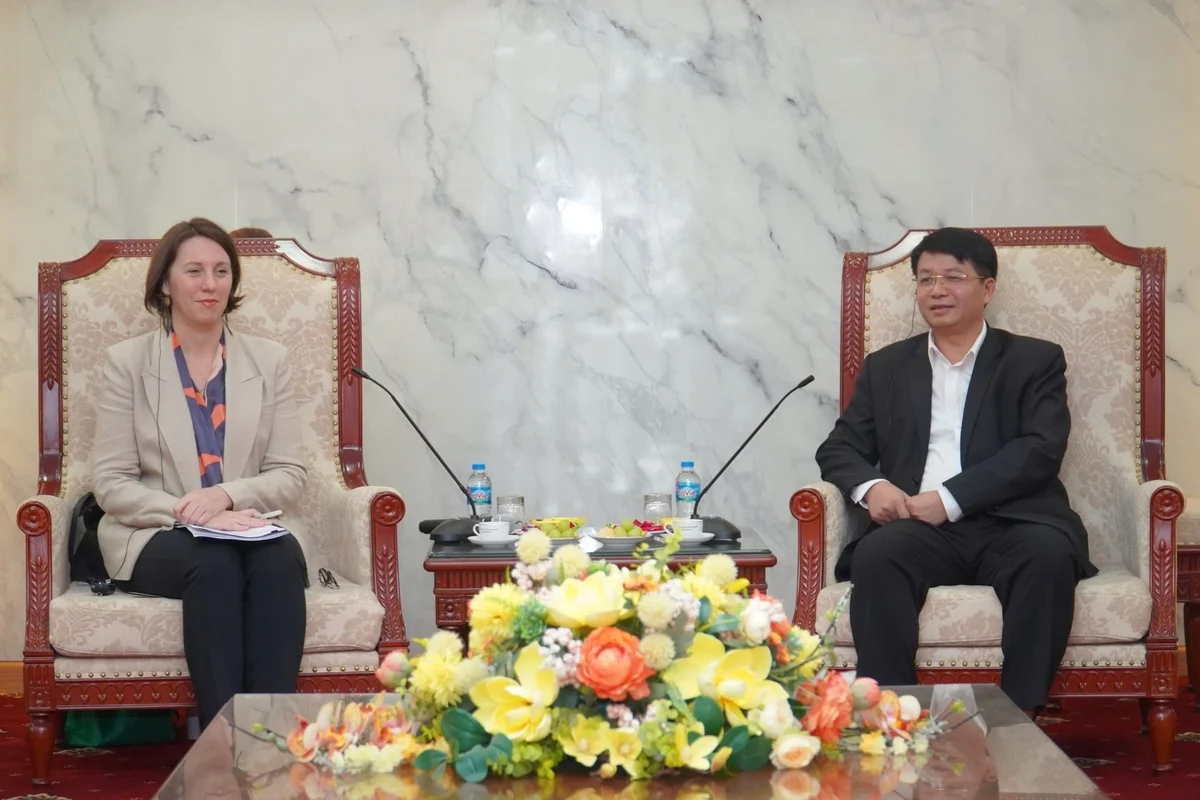
The high-level working session, held in Thai Nguyen, brought together representatives from the Australian Embassy in Vietnam, the Vietnam Disaster and Dyke Management Authority (VDDMA), and UNDP Vietnam, alongside provincial leadership, to chart a coordinated roadmap for post-disaster recovery, infrastructure resilience, and community-based climate preparedness.
Leading the international delegation was Renee Deschamps, whose visit underscored Australia’s growing role as a strategic development and resilience partner in Southeast Asia amid intensifying climate risks across the region. The meeting was hosted by Nong Quang Nhat and attended by senior representatives from Vietnam’s disaster management authorities and UNDP’s climate and environmental programs.
The engagement comes at a particularly critical moment for Thai Nguyen, one of northern Vietnam’s industrial and agricultural centers, which has experienced a series of increasingly severe weather events linked to climate volatility. Provincial officials reported that floods in 2025 inundated 43 communes and wards, impacting nearly 200,000 households and forcing thousands into emergency evacuation. More recently, violent thunderstorms and hailstorms swept across the province, injuring residents, damaging hundreds of homes, and destroying large swathes of agricultural land.
The mounting frequency and severity of such climate-related disruptions have elevated resilience planning from a localized governance issue into a broader economic and developmental imperative. Thai Nguyen’s leadership emphasized that climate adaptation is now inseparable from the province’s ambitions for industrial expansion, agricultural modernization, and sustainable rural development.
During the meeting, provincial authorities expressed appreciation for the rapid support previously extended by Australia and UNDP in helping vulnerable communities recover from natural disasters. At the same time, Thai Nguyen outlined a broader cooperation agenda encompassing climate adaptation along the Cau River basin, disaster mitigation infrastructure, carbon-credit development, industrial investment attraction, and sustainable advancement of the province’s strategically important tea industry.
As part of the expanded collaboration framework, the delegation announced a non-refundable aid package valued at approximately Rs 21 crore for the implementation of the project titled Emergency Response and Inclusive Early Recovery after Typhoon No. 10 (Typhoon Bualoi) and Typhoon No. 11 (Typhoon Matmo) in 2025. Scheduled for implementation in 2026, the initiative is designed to strengthen emergency response systems, accelerate inclusive rehabilitation efforts, and improve long-term resilience among high-risk communities.
Speaking during the session, Renee Deschamps highlighted Australia’s broader humanitarian and resilience-focused engagement across Vietnam, noting that Canberra has already committed nearly $3.8 million in assistance for disaster-affected communities nationwide. The support has prioritized vulnerable populations including women, children, persons with disabilities, and ethnic minority groups — segments that are often disproportionately exposed to climate-related shocks and recovery disruptions.
The partnership also reflects a wider evolution in global development financing, where climate adaptation, resilience infrastructure, and community recovery mechanisms are increasingly being integrated into long-term economic planning frameworks rather than treated as stand-alone humanitarian interventions.
For UNDP, the initiative aligns closely with its expanding focus on localized resilience systems, inclusive adaptation strategies, and sustainable development pathways capable of withstanding escalating environmental stress. For Australia, the collaboration reinforces its strategic objective of supporting climate stability and socio-economic resilience across the Indo-Pacific region.
More broadly, the Thai Nguyen initiative illustrates how climate diplomacy is rapidly becoming intertwined with economic cooperation, infrastructure development, and regional stability across Southeast Asia. As climate disruptions intensify in both frequency and financial impact, partnerships between governments, multilateral agencies, and development institutions are increasingly emerging as essential pillars of long-term resilience architecture.
For Vietnam, where climate vulnerability remains one of the defining structural challenges of future economic growth, the expanding cooperation between Thai Nguyen, Australia, and UNDP signals not merely disaster recovery assistance, but the gradual construction of a more adaptive, resilient, and sustainability-oriented development model for the decades ahead.
