
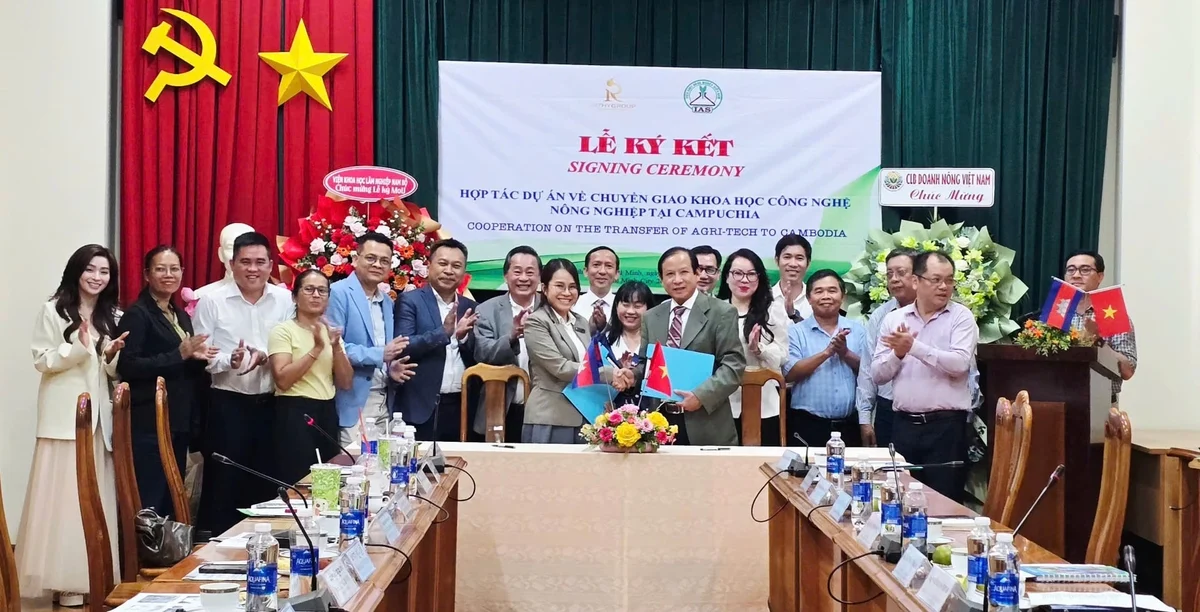
Deal targets seed innovation, productivity gains, and large-scale capacity building in rice and diversified farming sectors
The Southern Institute of Agricultural Science (IAS) has entered into a landmark agricultural science and technology cooperation agreement with Cambodia’s Rithy Granite Group, formalizing a strategic technology transfer partnership for the 2026–2030 period aimed at advancing productivity, modernizing seed systems, and strengthening long-term agricultural capacity in Cambodia.
The memorandum of understanding, signed in the presence of scientists, technical experts, and business representatives from both sides, establishes IAS as the lead technology consultant and transfer agency, while Rithy Granite Group assumes full financial responsibility for implementation and on-ground execution.
At the core of the partnership is the development of a rice seed research and production center in Cambodia, designed to support the breeding of pure-line rice varieties and the expansion of high-yield cultivation systems for both domestic consumption and export markets. The initiative is positioned as a foundational step toward improving seed quality, enhancing productivity, and strengthening Cambodia’s competitiveness in regional and global rice trade.
Beyond rice, the agreement outlines a broad and diversified agricultural cooperation framework spanning multiple value chains. These include the planning of concentrated production zones, investment in large-scale seed processing infrastructure, and the transfer of advanced cultivation models such as net-house and greenhouse systems for clean vegetable production.
The collaboration also extends to crop diversification and livestock innovation, including the introduction of improved cassava and high-yield cashew varieties, as well as pilot models for ecological free-range chicken farming under rubber tree plantations—reflecting a wider push toward integrated and sustainable farming systems.
On the human capital front, IAS will undertake targeted workforce development programs, including the training of Cambodian technical officers and the rollout of large-scale agricultural management capacity-building initiatives within Cambodia. The program is designed to strengthen institutional expertise and reduce long-term dependency by building a self-sustaining cadre of agronomy professionals.
According to IAS representatives, field assessments in Cambodia have identified critical gaps in seed quality, cultivation techniques, and soil management. Current rice yields in certain areas average around three tonnes per hectare, significantly below the eight to nine tonnes per hectare achieved in more advanced production systems, underscoring the need for technological upgrading and improved agronomic practices.
Through the partnership, both sides aim to progressively raise yields to approximately six to seven tonnes per hectare through improved seed systems, demonstration farms, and technology-driven cultivation models, while expanding value-added agricultural production across multiple commodities.
Cambodian partners emphasized that access to advanced seed technologies and modern farming systems will serve as a key driver for improving agricultural productivity and aligning output with international export standards.
For IAS, the agreement represents a significant milestone in deepening regional scientific collaboration. Officials noted that Vietnam and Cambodia share similar agro-ecological conditions and face comparable challenges, including climate variability, pest pressure, land degradation, and the need for higher value-added agricultural production.
They added that the partnership not only supports Cambodia’s agricultural modernization but also opens new avenues for scientific exchange, applied research, and international engagement for Vietnamese agricultural experts.
Overall, the agreement is positioned as a long-term, capacity-building partnership that integrates technology transfer, infrastructure development, and human resource training—laying the groundwork for a more resilient, productive, and regionally integrated agricultural sector across both countries.
