
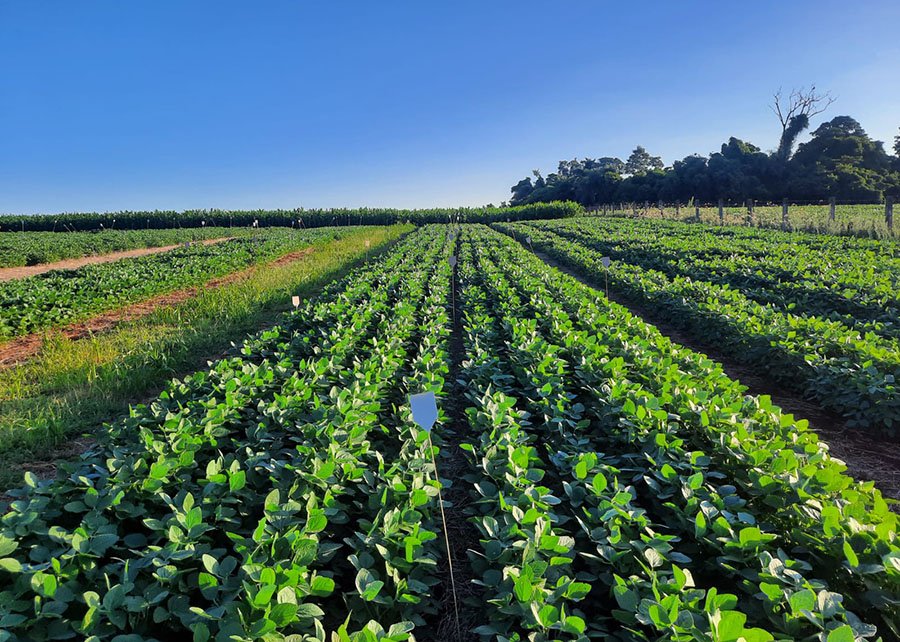
Early trials suggest struvite-based organomineral blends may enhance nutrient availability in degraded acidic soils
As global fertilizer markets remain vulnerable to geopolitical volatility and supply-chain disruption, Brazilian researchers are advancing an unlikely contender in the race for agricultural self-sufficiency: struvite, a phosphorus-rich mineral recovered from swine farming waste.
Scientists at Embrapa Agrobiology say the material could emerge as a viable domestic substitute for imported phosphate fertilizers, offering Brazil a pathway to reduce its heavy dependence on foreign agricultural inputs while simultaneously addressing mounting environmental pressures tied to intensive livestock production.
The research arrives at a strategically significant moment for Brazilian agriculture.
Despite its status as an agricultural superpower, Brazil still imports roughly 75 per cent of the phosphate fertilizers required to sustain its vast grain sector—a structural vulnerability that has increasingly drawn concern amid fluctuating commodity markets and geopolitical instability affecting global fertilizer trade.
Struvite, however, presents a markedly different proposition.
Produced through the chemical recovery of nutrients from swine wastewater, the crystalline compound—composed primarily of magnesium, ammonium, and phosphate—embodies what researchers describe as a circular-economy approach to modern farming: transforming agricultural waste streams into high-value production inputs.
Field experiments conducted by Embrapa indicate that struvite can replace up to half of the phosphorus demand in soybean cultivation while maintaining yields near 3,500 kilograms per hectare, closely aligned with Brazil’s national soybean productivity average recorded in 2025.
For researchers, the implications extend beyond simple fertilizer substitution.
Caio de Teves Inácio, coordinator of the study, described the initiative as part of a broader technological transition aimed at strengthening Brazil’s agricultural autonomy while aligning crop production with sustainability and resource-efficiency objectives.
The agronomic performance of struvite appears particularly promising under tropical soil conditions, where conventional phosphate fertilizers often suffer from rapid phosphorus fixation caused by acidic soils rich in iron and aluminum oxides.
According to the research team, struvite’s gradual nutrient-release profile and alkaline reaction improve phosphorus recovery efficiency in degraded tropical soils, potentially extending the usable life of a resource that remains fundamentally non-renewable.
Researchers are also experimenting with organomineral fertilizer formulations that combine struvite with organic matter and conventional mineral nutrients. Early trials suggest these blended formulations can substantially improve phosphorus diffusion in soil compared with ground struvite alone.
Yet the appeal of the technology extends well beyond crop performance.
In Brazil’s major swine-producing regions—particularly across the South and Central-West—the accumulation of animal waste has become both an environmental challenge and a regulatory constraint. Excess phosphorus and nitrogen runoff from livestock operations pose contamination risks to rivers, reservoirs, and groundwater systems, while also limiting the expansion capacity of intensive farming operations.
Struvite recovery offers a mechanism to extract surplus nutrients before waste is applied to farmland, reducing pollution risks while simultaneously generating a potentially marketable fertilizer product.
Embrapa estimates that widespread adoption of the technology on farms with more than 5,000 swine could generate approximately 340,000 tons of struvite annually across Brazil—opening the possibility of an entirely new domestic fertilizer value chain rooted in livestock waste recovery.
Globally, struvite has already gained traction within advanced nutrient-recovery systems, particularly in countries confronting nutrient surpluses from industrial livestock production or dense urban wastewater networks. More than 80 production facilities were reportedly operational worldwide by 2019, with China, the United States, and Germany emerging as leading centers of research and commercialization.
Brazil, however, remains in the early stages of scientific development and field validation for tropical agriculture.
That gap, researchers argue, represents both a challenge and an opportunity.
Inácio noted that despite Brazil’s vast agricultural scale and abundance of recoverable nutrient streams, relatively little is known about how struvite behaves under the country’s uniquely acidic tropical soil conditions—a paradox that has intensified the urgency of domestic research efforts.
As fertilizer security rises higher on the geopolitical agenda and circular-economy technologies gain momentum across global agriculture, Brazil’s wager on struvite signals a broader shift underway in farming itself: one where waste is increasingly being reimagined not as a liability, but as strategic industrial feedstock for the next generation of food production.
