
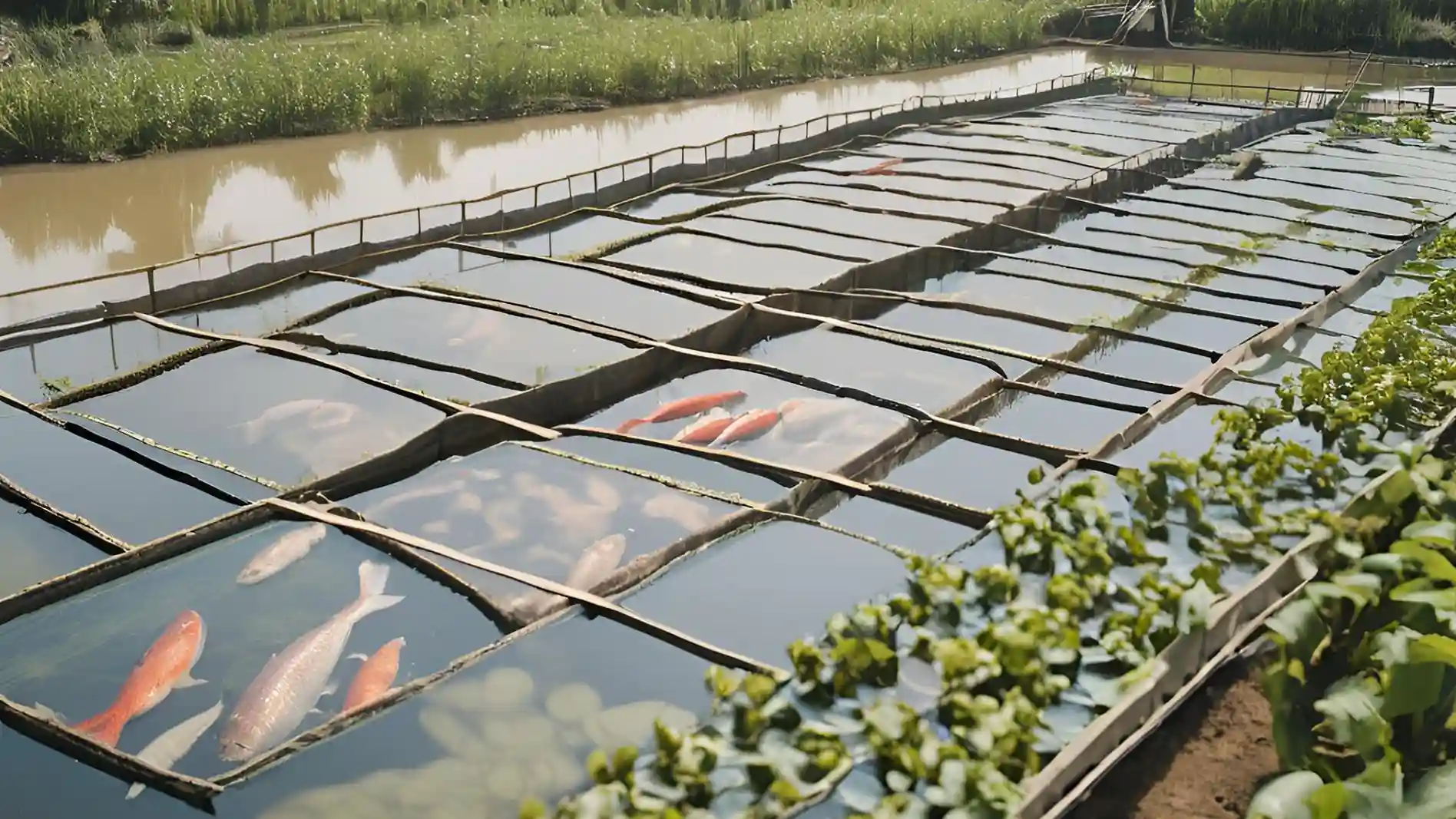
Developed in partnership with Kasetsart University and the Thailand International Cooperation Agency, the project aims to strengthen regional food-production capacity
In a fresh signal of deepening South–South cooperation around food security and agricultural modernization, Thailand and Nigeria are moving forward with plans to establish a new sustainable agriculture and aquaculture training hub designed to serve not only Nigeria, but the broader West African region.
The initiative, formally titled the Thai–Nigeria Sustainable Agricultural Technology Learning Centre, is set to rise within the grounds of the Federal Cooperative College following a high-level site inspection led by Thirapath Mongtolnaun, Thailand’s ambassador to Nigeria.
The proposed centre reflects a widening strategic alignment between the two nations as they seek to expand collaboration in climate-resilient agriculture, integrated farming systems, and aquaculture development at a time when food security has become an increasingly urgent geopolitical priority.
At the core of the project lies a tri-partite collaboration involving the Federal Cooperative College, Kasetsart University, and the Thailand International Cooperation Agency—an institutional partnership intended to fuse technical expertise, academic research, and international development cooperation into a single regional training platform.
Speaking during the inspection visit, Ambassador Mongtolnaun described the initiative as a flagship undertaking within Thailand’s broader agricultural diplomacy agenda, particularly in the fields of aquaculture and sustainable farming systems.
The project builds upon the Thailand–Africa Initiative policy framework, originally introduced in 2013 and revitalized in 2025 to accelerate economic and technical collaboration between Thailand and African nations. Agriculture, food production, and knowledge transfer have emerged as central pillars within that renewed strategy.
For Thailand, the venture represents more than development assistance; it reflects an effort to project technical influence through practical agricultural cooperation, particularly in regions confronting mounting pressure from population growth, food inflation, and climate-related production risks.
The proposed centre is expected to focus heavily on African catfish production, integrated agricultural systems, and sustainable farming methodologies tailored to local conditions. Officials say the facility will function as both a demonstration site and a vocational training institution capable of supporting students, farmers, extension officers, and agribusiness operators.
Ejikeme Obidiegwu, provost and chief executive officer of the college, said the institution is expected to train at least 100 students annually while also serving participants from across West Africa.
The broader ambition is to establish a regional nucleus for agricultural capacity building—one capable of strengthening technical knowledge, improving productivity, and facilitating long-term exchange between Asian and African farming systems.
As governments increasingly recognize food security as inseparable from economic stability and national resilience, partnerships of this nature are assuming greater strategic significance.
For Nigeria, Africa’s largest economy and one of its fastest-growing consumer markets, the centre could provide a pathway toward improved technical expertise in aquaculture and sustainable farming. For Thailand, meanwhile, the project offers an opportunity to expand its agricultural footprint abroad while reinforcing its role as a global exporter of farming knowledge and food-production technologies.
In an era defined by climate uncertainty and shifting supply chains, the language of diplomacy is increasingly being spoken through seeds, water systems, and agricultural training corridors.
