
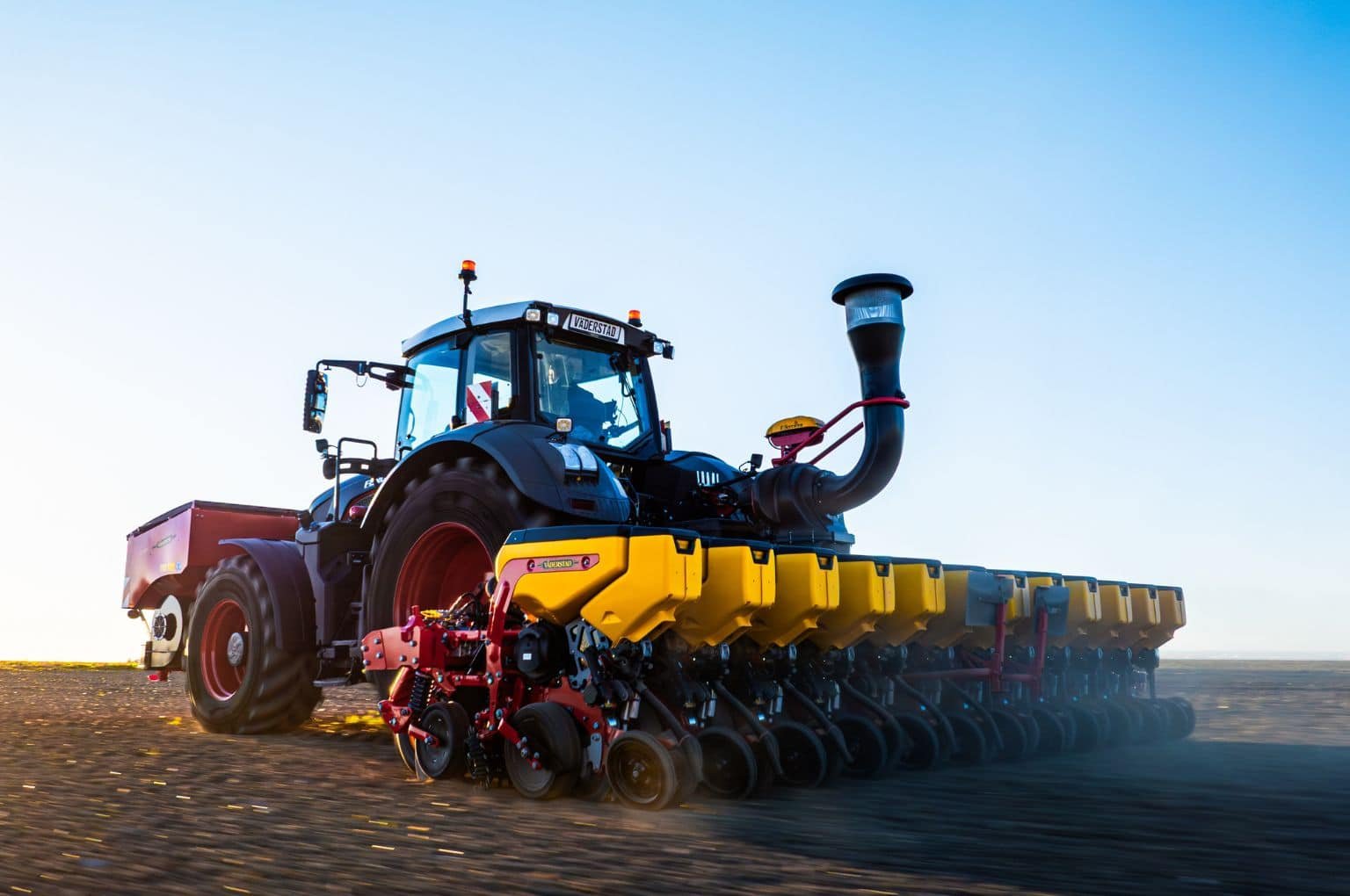
Agricultural machinery manufacturer Väderstad has unveiled a significant upgrade to its Tempo V 6–12 planter system, reinforcing a broader industry shift toward precision agriculture, input efficiency, and data-driven crop establishment.
The updated system, designed for model year 2027, is paired with the front hopper FH 2200 and introduces a suite of engineering refinements aimed at improving fertilizer accuracy, operator visibility, and overall machine ergonomics.
At the center of the upgrade is a new metering configuration: the FH 2200 front hopper will now feature four Fenix III metering units, enabling section control and variable-rate fertilizer application across four distinct zones.
The development marks a notable step forward in precision input management, allowing growers to tailor fertilizer distribution more closely to spatial field variability, headland conditions, and crop demand patterns—reducing overlap while improving nutrient-use efficiency.
“With 4 section fertilizer control, we take another step towards even higher agronomic precision,” said Oskar Karlsson, Vice President Product & Development Planters at Väderstad. “Farmers can now apply fertilizer where it is needed, improving crop establishment while optimizing fertilizer output.”
Beyond metering improvements, the redesign introduces a reconfigured fertilizer delivery system intended to streamline machine integration and enhance operator experience.
In previous configurations, fertilizer tubes ran along the side of the tractor, partially obstructing visibility from the cab. The upgraded design reroutes all four tubes beneath the tractor chassis, creating a cleaner hydraulic and pneumatic layout while significantly improving forward visibility during field operations.
The company has also re-engineered the rear distribution system of the Tempo V planter, replacing the elevated distributor head with four compact units positioned closer to the machine frame. The new architecture reduces complexity, simplifies mounting procedures, and shortens fertilizer transport distances within the system.
Engineers say the redesign contributes not only to improved distribution accuracy but also to faster setup times and smoother in-field adjustments—particularly important during variable-rate application scenarios where responsiveness directly affects nutrient efficiency.
“The combination of the new tube routing and the redesigned distributor heads makes the machine easier to handle,” Karlsson added, noting that reduced transport delay in fertilizer delivery enhances real-time precision during on-the-go adjustments.
Taken together, the upgrades reflect a broader evolution in modern planting systems: from mechanically driven equipment toward integrated agronomic platforms designed to maximize yield potential while minimizing input waste.
As precision agriculture continues to advance, machinery like the upgraded Tempo V illustrates how incremental engineering changes are increasingly shaping the economics—and environmental footprint—of large-scale farming.
