
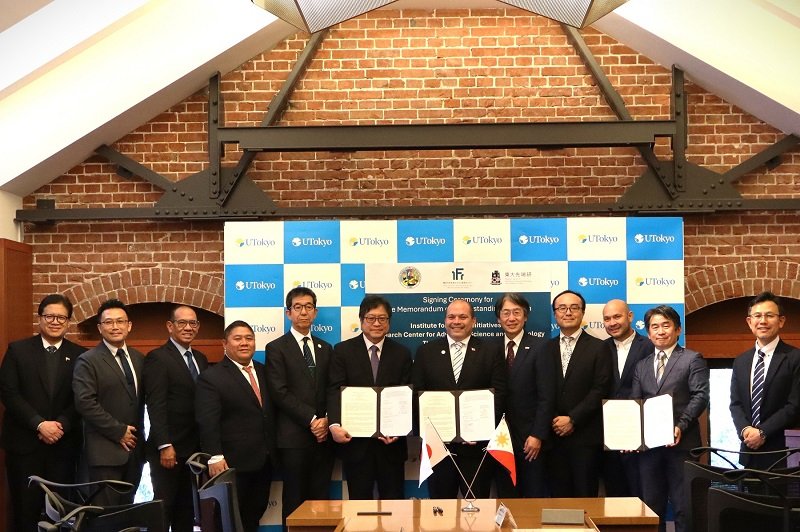
The initiative brings together Japan and the Philippines to integrate agriculture, engineering, and sustainability science
A new academic and institutional collaboration has been formalised between Japan and the Philippines as the University of Tokyo deepens its research engagement with Southeast Asia’s bio-based agriculture sector through a Memorandum of Understanding with the Philippine government’s sugar industry regulator.
The agreement brings together the University of Tokyo’s Institute for Future Initiatives and Research Center for Advanced Science and Technology with the Sugar Regulatory Administration under the Philippines’ Department of Agriculture, marking a coordinated push to advance sugarcane-related life cycle research and technology development.
Signed at the University of Tokyo’s Hongo Campus, the Memorandum of Understanding establishes a framework for joint academic research focused on sugarcane-derived production systems, technology assessment, systems design, and the broader social implementation of bio-based industrial pathways.
At its core, the collaboration seeks to elevate sugarcane beyond its traditional role as a commodity crop, positioning it instead as a multi-output platform for bioenergy, green chemicals, and circular economy applications.
Researchers from both institutions are expected to work closely on life cycle assessment methodologies, systems engineering, and sustainability evaluation frameworks, with a strong emphasis on translating academic findings into scalable, real-world applications.
The initiative draws on the complementary expertise of both partners: the University of Tokyo’s advanced capabilities in life cycle assessment and systems design, and the Sugar Regulatory Administration’s operational and research role within the Philippine sugar industry.
Yasunori Kikuchi of IFI and Satoshi Ohara of RCAST have been central in shaping the collaboration agenda, following extensive technical discussions with Philippine counterparts and with support from the Japan International Research Center for Agricultural Sciences, which has already been engaged in related climate-resilient sugarcane research initiatives.
The agreement is also expected to strengthen ongoing efforts in developing sugarcane varieties and production systems adapted to tropical island conditions, while expanding the scope of research into industrial applications such as biofuels and advanced green materials.
Speaking during the signing ceremony, academic and institutional leaders highlighted the growing strategic importance of sugarcane as a versatile resource capable of contributing simultaneously to rural development, industrial innovation, and climate mitigation.
Kensuke Fukushi, Director of IFI, and Masakazu Sugiyama, Director of RCAST, emphasized the crop’s potential to underpin new value chains that integrate agriculture, engineering, and economic systems design, enabling both regional development and decarbonisation objectives.
They also underscored the importance of bridging academic research with social implementation, ensuring that technological advances in bio-based production systems can be effectively deployed in farming communities and industrial ecosystems.
Philippine Sugar Regulatory Administration Administrator Pablo Luis S. Azcona described sugarcane as a strategic resource that extends beyond sugar production into energy and chemical industries, noting its potential role in addressing structural challenges such as rural depopulation and agricultural modernisation.
The signing ceremony was attended by representatives from the Philippine Embassy in Tokyo, including Christian L. De Jesus, as well as leadership from JIRCAS and approximately 30 participants from academia, research, and media institutions.
In closing remarks, Atsushi Tsuda expressed appreciation for the partnership, while Yasunori Kikuchi highlighted upcoming field engagement activities in Tanegashima, where joint research teams are expected to further explore applied sugarcane systems under real-world conditions.
As global demand for low-carbon materials and renewable feedstocks accelerates, the partnership positions sugarcane as a focal point for interdisciplinary research linking agriculture, engineering, and sustainability science across Asia.
